

Southern California faults face highest tectonic stress levels in 1,000 years, study shows
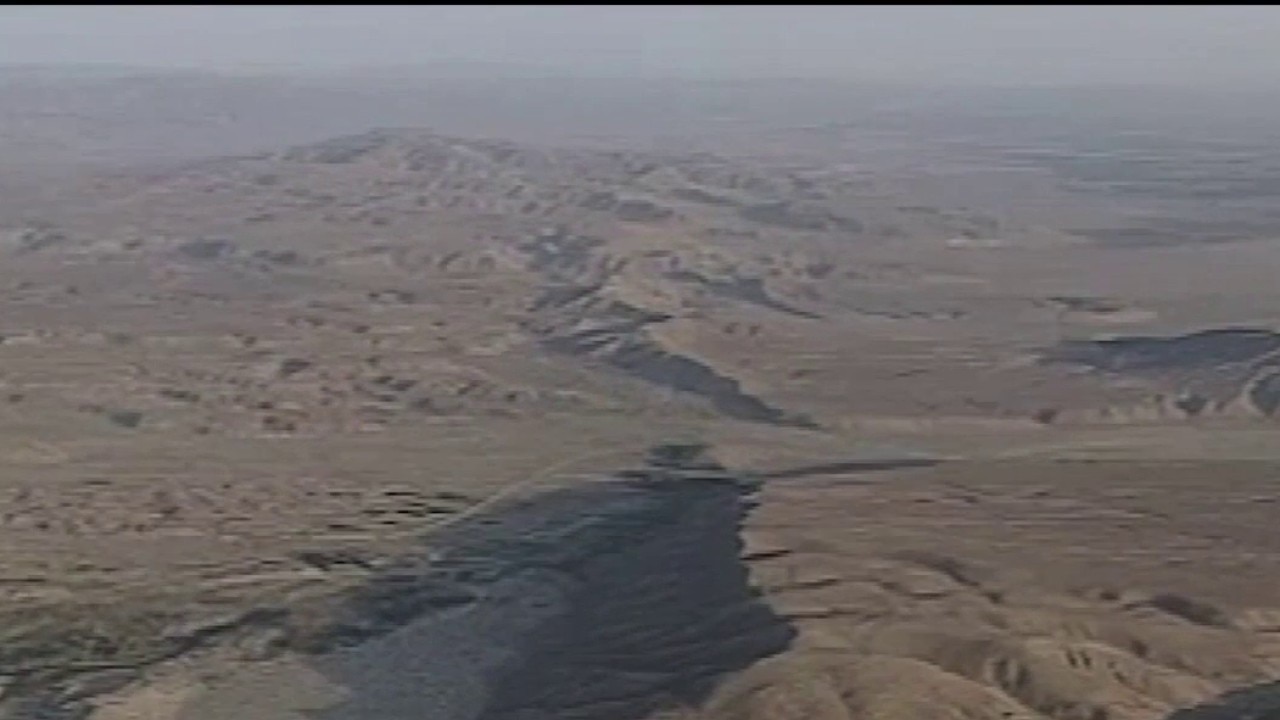
Tectonic stress in SoCal faults hits 1,000-year high
Tectonic stress along the San Andreas and San Jacinto fault systems in Southern California has now reached, and in some places exceeded, the highest levels seen in the past 1,000 years.
LOS ANGELES - Southern California's primary seismic zones have reached a historic tipping point, with stress levels along the San Andreas and San Jacinto fault systems now matching or exceeding the highest levels seen in the past 1,000 years, according to a new study.
This high level of accumulated pressure means the region is now heavily loaded, creating a scenario where a single major rupture could potentially cross both fault systems. While not an indicator of an immediate threat, this interconnected risk highlights a heightened vulnerability for millions of residents across the region.
What we know:
Tectonic stress along multiple segments of the San Andreas and San Jacinto fault systems has reached, and in some areas surpassed, the highest levels recorded over the past millennium.
According to a study published in "Journal of Geophysical Research: Solid Earth," more than 160 years have elapsed since the last major rupture in this region, leaving the system in a "critically loaded state."
The research was spearheaded by Earth scientists at the University of Hawaiʻi at Mānoa, alongside co-authors from Northern Arizona University, the University of Bern, the U.S. Geological Survey (USGS), and the University of California, San Diego.
To determine these stress levels, the team developed a physics-based computer model simulating 1,000 years of regional earthquake data. They fed the simulation geological evidence, including tree-ring records and radiocarbon dating of displaced sediments, to estimate present-day stress accumulation.
SUGGESTED:
- Powerful 6.1M earthquake in Cuba felt in Florida, one of strongest ever recorded in the Gulf
- Huge 7.8 earthquake strikes off the coast of the Philippines
- Powerful magnitude 4.6 earthquake rattles cities across central California
The findings highlight a major vulnerability at the Cajon Pass, a critical junction between the two systems. The study demonstrates that this pass, located between the San Bernardino Mountains to the east and the San Gabriel Mountains to the west, can act as an "earthquake gate."
"Our results show that stress levels on multiple fault segments are now at or above the highest values seen in the past millennium and that the region may be capable of a large through-going rupture involving both fault systems," said lead author Liliane Burkhard, a research affiliate at UH Mānoa and scientist at the University of Bern.
A simultaneous, joint rupture across both faults would release significantly more energy and cause more severe widespread destruction than an independent rupture on a single fault, the study shows.
This scenario directly threatens heavily populated and infrastructure-critical corridors including Los Angeles, San Bernardino, Riverside, and the Coachella Valley.
What we don't know:
While the study confirms that the fault systems are under an extraordinary amount of stress, it cannot predict exactly when an earthquake will occur.
Scientists do not know the precise timing of a future rupture, nor can they definitively guarantee whether the Cajon Pass "gate" will open or stay closed during the next seismic event.
"The conditions that determine whether the 'earthquake gate' at Cajon Pass opens or stays closed appear to be related to how closely the stress levels on the two fault systems are aligned with each other at the time of rupture," Burkhard explained.
What they're saying:
The researchers are noting that these findings should be treated as a tool for evaluation rather than a countdown clock.
"This is not a prediction of when an earthquake will happen," Burkhard said. "However, studies like this are important contributions to national and global earthquake hazard research in that we are using rigorous, quantitative science to better understand the risk facing millions of people. What we can say is that the system is critically stressed, and that physics-based models like this one give us a clearer picture of the range of scenarios we should be prepared for."
What's next:
The researchers intend to develop this physics-based stress modeling framework into a reusable tool for multi-fault hazard assessments worldwide.
Because the framework is highly adaptable, it can be applied to other complex, high-risk fault junctions globally to help scientists better understand simultaneous rupture threats.
What you can do:
For residents in the affected Southern California zones—including Los Angeles, San Bernardino, Riverside, and the Coachella Valley—this study serves as a reminder to review personal emergency preparedness plans, secure heavy household items, and maintain up-to-date earthquake survival kits.
The Source: This report is based on a peer-reviewed study published in the "Journal of Geophysical Research: Solid Earth," led by scientists at the University of Hawaiʻi at Mānoa in collaboration with researchers from Northern Arizona University, the University of Bern, the U.S. Geological Survey, and UC San Diego.