

LA Metro approves massive $25B underground rail line to bypass 405 Freeway

Metro approves new underground line through Sepulveda Pass
Going from the San Fernando Valley to West LA might get a bit easier for commuters.
LOS ANGELES - The Los Angeles Metro Board of Directors took a historic step Thursday by approving an underground heavy rail option for the Sepulveda Transit Corridor.
This project is designed to provide a high-capacity transit link between the San Fernando Valley and the Westside, offering a rail alternative to one of the nation's most congested freeways.
What we know:
The board selected "Modified Alternative 5," a nearly 13-mile alignment that will run from Van Nuys to the E Line/Expo Sepulveda Station.
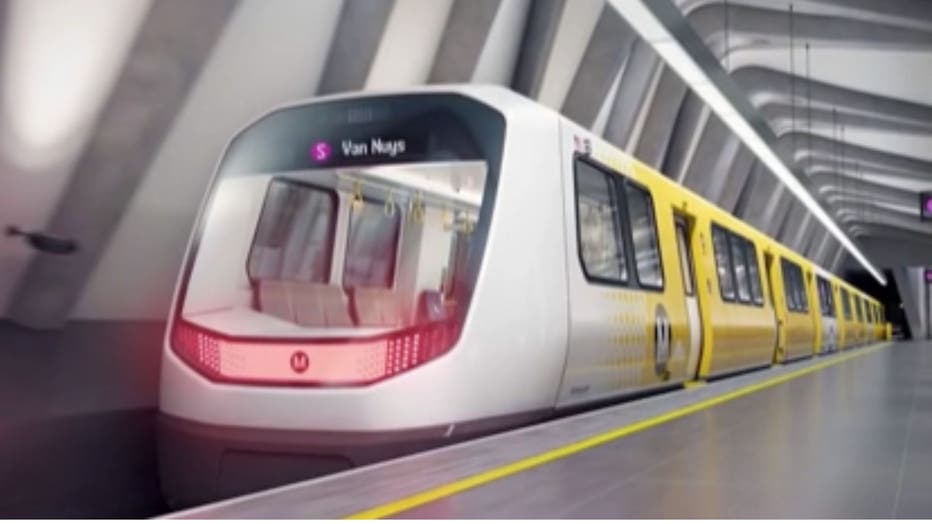
Photo courtesy Metro
The route includes stops in Sherman Oaks and UCLA, with tracks running deep beneath the Santa Monica Mountains and neighborhoods like Bel-Air and Beverly Crest.
Metro staff confirmed the rail line will be entirely underground, with tunnels reaching depths of at least 500 feet to eliminate surface construction and minimize vibration for residents above.
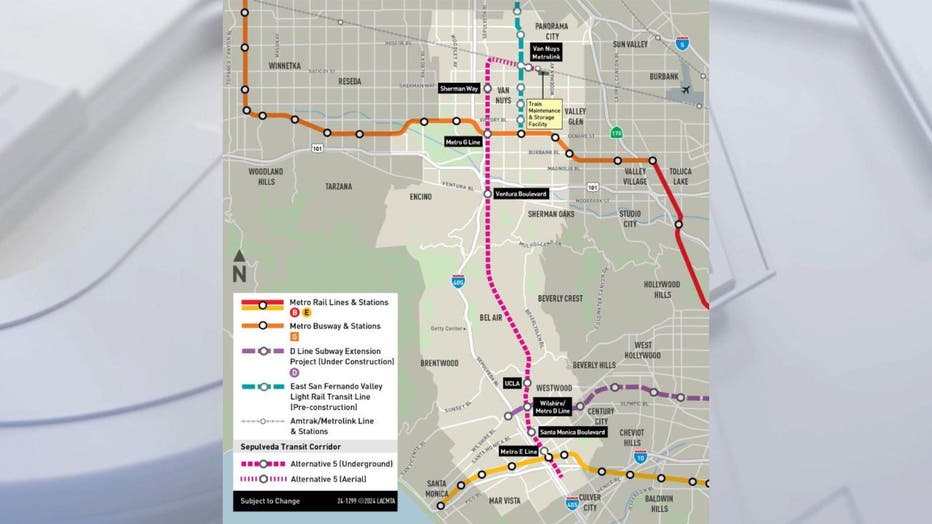
Photo courtesy Metro
The project is currently estimated to cost between $20 billion and $25 billion, partially funded by Measure M, a 2016 voter-approved sales tax.
What they're saying:
"This project represents a fundamentally different strategy," said Metro Director Katy Yaroslavsky, noting that past attempts to widen freeways have failed.
She described the corridor as being as transformative for Los Angeles as the LA Aqueduct.
Cecily Way, Metro’s senior executive officer of countywide planning, emphasized the regional impact: "The Sepulveda Transit Corridor project would add a critical regional connection... linking the San Fernando Valley and the Westside, providing a fast, safe and reliable alternative to the congested 405 Freeway."
By the numbers:
13 miles: The approximate length of the new rail alignment.
7: The number of planned stations along the route.
$20B–$25B: The current estimated price tag for the project.
500 feet: The minimum depth the tunnels will reach beneath the mountains.
The backstory:
Metro evaluated five different proposals before settling on the underground heavy rail option.
Other considered alignments included monorail systems and aerial tracks.
While monorail options generally cost less, officials determined that heavy rail offered higher ridership potential, faster travel times, and more frequent service.
The project has faced a mix of feedback, receiving strong support from UCLA students and transit advocates, while facing criticism from some homeowners in Bel-Air regarding tunneling beneath private property.
What's next:
The approval of the Locally Preferred Alternative allows Metro to begin refining the design and advancing the final environmental impact report.
Two amendments were added to the plan: one to bolster community outreach during the design phase and another to explore potential transit connections to the Getty Center.
Metro officials cautioned that while this is a major milestone, "shovels in the ground" are still years away.
The Source: This report is based on the official vote and public proceedings of the Los Angeles Metro Board of Directors meeting held on January 22, 2026. Information regarding project costs, route specifics, and board amendments was provided by Metro staff reports and public statements from board members including Mayor Karen Bass and Councilwoman Katy Yaroslavsky.