

Feds bust bizarre $27M California hospice scam that billed dead patients
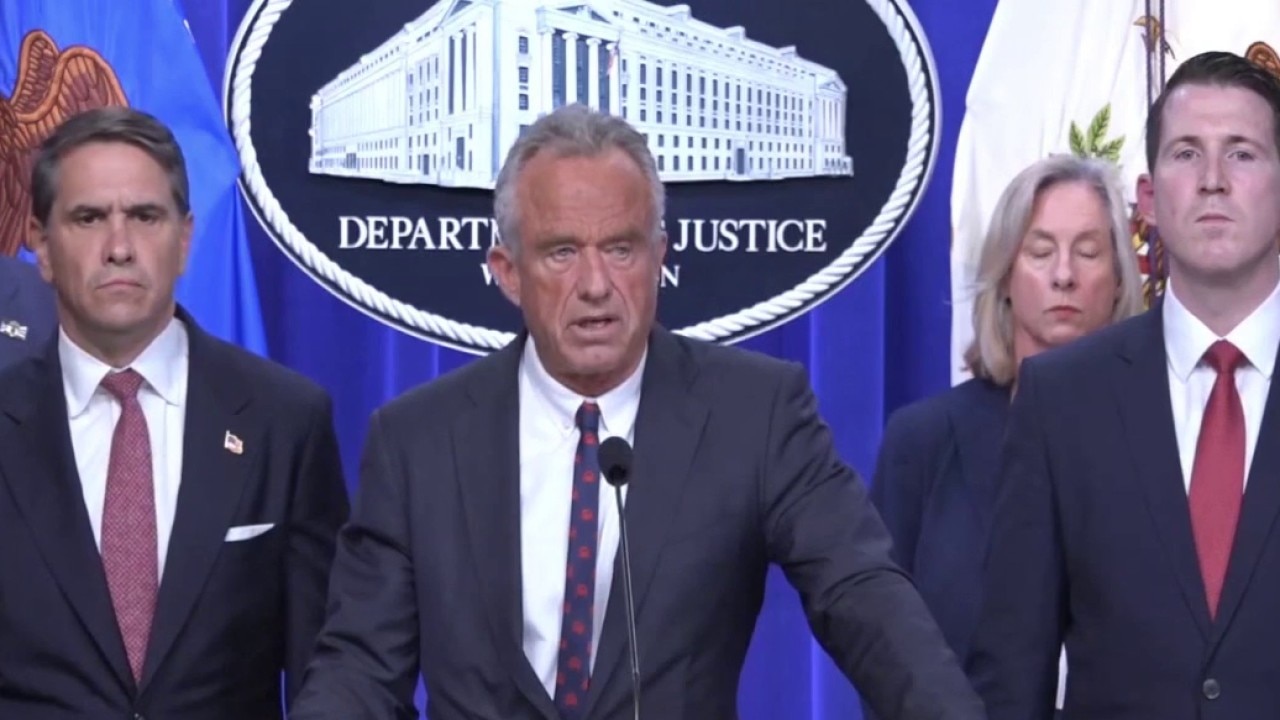
10 SoCal residents arrested in health care fraud takedown
The U.S. Department of Justice launched its massive 2026 National Health Care Fraud Takedown, charging 455 individuals nationwide over $6.5 billion in fraudulent claims.
LOS ANGELES - The U.S. Department of Justice has launched its historic 2026 National Health Care Fraud Takedown, unearthing $6.5 billion in fraudulent claims and charging 455 individuals nationwide.
California was a major target, exposing a bizarre $27.7 million scam where a hospice owner used information from dead people to trick the government.
What we know:
The 2026 National Health Care Fraud Takedown marks the largest whole-of-government effort to combat medical corruption in U.S. history.
A total of 455 defendants, including 90 doctors and licensed professionals, face charges spanning 56 federal districts, the U.S. Department of Justice announced during a press conference on Tuesday.
The nationwide action led to the immediate suspension of Medicare payments to 1,000 individuals in the first half of the year, with nearly 800 of those suspensions originating in California alone.
SUGGESTED: California’s $1.3B Medicaid funding put on hold amid fraud suspicions
The operation resulted in the seizure of over $182 million in cash, luxury items, vehicles, and real estate.
Local perspective:
Federal authorities executed a sweeping regional crackdown targeting several elaborate fraud operations across the greater Los Angeles metropolitan area.
In the largest local case, Christina Mareik, 61, of Whittier, allegedly facilitated thousands of fraudulent prescriptions for expensive, non-contracted drugs through Monte Vista Pharmacy.
This scheme took advantage of a temporary suspension of Medi-Cal’s prior authorization requirements, resulting in $178 million in actual payouts for low-cost generic drugs that were medically unnecessary or never actually provided to patients. Patient marketer Paul Richard Randall, 67, has already pleaded guilty to wire fraud in connection with this operation.
In a separate Medicare scheme, Oren David Shachar, 59, of Van Nuys, operated four different hospice care companies to submit $27 million in fraudulent claims for patients who were either not terminally ill or already deceased.

Yacht and Bentley Continental GT purchased with proceeds of alleged fraud. / DOJ
Shachar allegedly bought patient identifying data from marketers Abraham Shin and Jeannie Choi and paid illegal kickbacks to keep patients enrolled.
SUGGESTED DOJ targets California’s ‘kingdom of fraud’ in massive $60M hospice takedown
Meanwhile, Brenda Lee Lopez, 63, of Norwalk, a medical office manager, allegedly forged the signatures of four medical providers to order unnecessary urinary tract, respiratory, and toxicology tests for Medicare patients who never provided specimens, pocketing $335,000 in kickbacks that she spent largely at a casino.
Licensed medical professionals are also facing severe charges for abusing their positions.
Three physicians—Wisam Khader, 36, and Patrick Murphy, 40, both of Irvine, alongside Justin Evans, 37, of Colorado—were indicted for allegedly using their prescribing power to trade nearly 90 prescriptions for controlled substances like oxycodone, amphetamine, and morphine among one another without any legitimate medical purpose.
Dr. Eugene Richard Dorsey, 83, of Orange, an orthopedic psychiatrist, is accused of falsifying psychiatric reports from 2020 to 2025 to help claimants fraudulently qualify for federal worker’s compensation, resulting in over $1.8 million in overpayments.
Big picture view:
On a national level, the operation involved unprecedented collaboration, including 50 state Medicaid Fraud Control Units, the DEA, and international partners who extradited high-profile fraudsters from Cyprus, Estonia, and the Philippines. Administrative actions running parallel to the criminal charges simultaneously suspended 1,079 health care providers and revoked billing privileges for 1,403 others.
What we don't know:
While federal authorities have outlined the mechanics of the California hospice fraud, it remains unclear how many funeral homes or employees were compromised in the data-selling network.
The full identities of the deceased beneficiaries whose profiles were exploited have not been publicly released.
SUGGESTED: California doctor convicted in $45M Medicare fraud that funded lavish trips, $12K antique crossbow
It's unknown how much of the $27.7 million stolen in the California scheme has been successfully recovered by law enforcement.
Timeline:
- October 1, 2025: The Drug Enforcement Administration (DEA) begins tracking and executing 928 administrative cases seeking to revoke authority to handle controlled substances.
- April 7, 2026: The Department of Justice announces the creation of the National Fraud Enforcement Division to aggressively scale operations against federal benefit theft.
- June 4, 2026: The FBI establishes the "Most Wanted Fraudsters List" to track international healthcare fugitives.
- June 8, 2026: Just four days after the list's release, Herb Kimble, a fugitive tied to a $1.2 billion telemedicine fraud scheme, is apprehended in the Philippines.
- June 12, 2026: Two members of a massive $10.6 billion transnational fraud organization are extradited from Estonia and make their initial court appearances in New York.
- June 22, 2026: Transnational fugitive Ibrahim Hilmi makes his initial appearance in the Southern District of Florida after being apprehended in Kyrenia in connection with a $3.7 billion scheme.
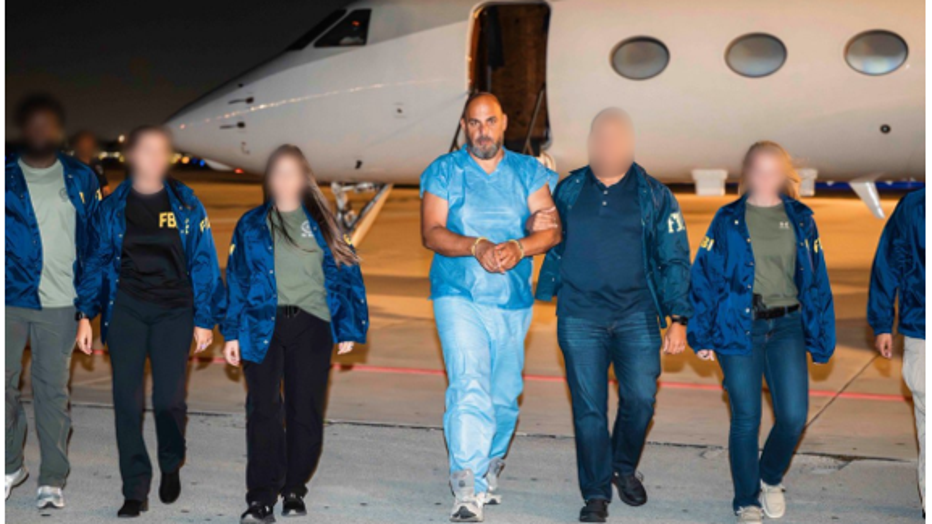
Ibrahim Hilmi landing in the United States after being apprehended in a $3.7 billion fraud scheme. / DOJ
- June 23, 2026: The DOJ officially details the results of the nationwide takedown, including the enforcement actions across California.
What they're saying:
Acting Attorney General Todd Blanche emphasized the administration's structural shift to combat white-collar crime.
"This year’s National Health Care Fraud Takedown represents the greatest whole-of-government effort to combat health care fraud in our Nation’s history. Under the decisive leadership of President Donald Trump, Vice President JD Vance, the White House Task Force to Eliminate Fraud, and our law enforcement partners, this administration has ushered in a new era of enforcement that will safeguard taxpayer dollars."
Assistant Attorney General Colin M. McDonald of the National Fraud Enforcement Division issued a direct warning to corrupt medical staff.
"As today’s cases and arrests show, there is no case too big, no scheme too complex, and no hiding place too remote for our relentless fraud-fighting team. Our message is simple: if you put profit over patients, you should expect to be put in prison."
FBI Director Kash Patel highlighted the depth of inter-agency coordination.
"While today’s announcement is one of the largest on record–every arrest is a continued message to criminal actors who rob American taxpayers that you will not get away with your crimes."
CMS Administrator Dr. Mehmet Oz focused on moving away from reactive policing.
"Prosecuting criminals who steal from American patients is necessary—but stopping them before a single dollar leaves the building is smarter. CMS is done playing catch-up. We’re deploying advanced data analytics to expose fraud networks, freeze suspicious payments, and shut down bad actors before they can do damage."
What's next:
The Fraud Division and CMS have finalized a breakthrough agreement providing investigators with cloud computing space within the CMS Integrated Data Repository. This will let the government use smart computer tools and AI to spot suspicious bills immediately.
At the same time, CMS is rolling out a "Claims Core" processing system equipped with electronic attestation, identity verification, and IP address log-in requirements.
Federal authorities are also working to secure pledges ensuring that all Medicaid and Managed Care plans standardize their reporting fields to match Medicare Part B data, closing systemic loopholes utilized by fraudsters across states like California.
What you can do:
Local Medi-Cal and Medicare beneficiaries are encouraged to carefully review their Explanation of Benefits (EOB) statements for any medical services, hospice care, laboratory tests, or prescription drugs that they did not order or receive.
Patients who notice suspicious billing from entities like Monte Vista Pharmacy, Azure Hospice Care, or Valley Glen-based medical offices should report the activity immediately to the HHS-OIG fraud hotline or via the Department of Justice’s official health care fraud reporting portal.
The Source: This report is compiled directly from official enforcement logs, indictments, and statements released by the U.S. Department of Justice, the FBI, the DEA, and the Centers for Medicare and Medicaid Services (CMS). Information regarding California specific operations stems from case filings within the U.S. Attorney's Office for the Central District of California and state Medicaid Fraud Control Units. Project metrics were verified utilizing the cross-agency findings processed by the federal Data Fusion Center and the Financial Intelligence Review Team.