

SNAP benefits ending: Here's where you can get emergency assistance in Southern California
Millions set to lose SNAP benefits
SNAP, formerly known as food stamps, will lapse for the first time in modern history at the end of the week.
LOS ANGELES - Due to the ongoing government shutdown, the United States Department of Agriculture (USDA) confirmed that 42 million Americans will not receive Supplemental Nutrition Assistance Program (SNAP) benefits starting November 1.
This cutoff is leaving many families without federal food aid, prompting local organizations to step up and offer free food and meals.
If you're losing SNAP benefits, known as CalFresh in California, here's where you can get emergency assistance in Southern California.
What you can do:
Food banks
To find a food bank near you, call 211 or tap/click on your county below:
Free meal services
In LA County, the Los Angeles County Department of Parks and Recreation offers free snack and dinner programs for youth, teens, and seniors. You can see a full list of locations here.
Senior meal programs
Tap or click your county below:
LAUSD food services
California is mandated to provide two free meals (breakfast and lunch) for students Monday through Friday.
Additionally, the Los Angeles Unified School District offers weekend meal kits for Saturday and Sunday. To learn more, tap or click here.
Other assistance
DoorDash is offering SNAP recipients free delivery and waived service fees in cooperation with more than 300 food banks, pantries, and community organization partners. You can learn more about Project DASH by tapping or clicking here.
In LA's San Fernando Valley, the Rescue Mission Alliance Food Bank has multiple food pantry locations.
The backstory:
Earlier this week, the U.S. Department of Agriculture (USDA) confirmed that SNAP benefits will not be issued in November if the government shutdown continues.
This came after the Trump administration rejected using more than $5 billion in contingency funds to keep the program flowing into November.
SNAP helps about 1 in 8 Americans buy groceries using debit cards normally loaded each month by the federal government. Some states have pledged to keep the benefits flowing even if the federal program halts payments, but a memo from the USDA says states would not be reimbursed for temporarily picking up the cost.
PREVIOUS COVERAGE: Here's how many people receive SNAP benefits in your state
The shutdown began when a short-term measure to fund the government failed to advance in the Senate. The current impasse is now the second-longest on record. The administration took steps leading up to the shutdown to ensure SNAP benefits were paid in October, with states and lawmakers looking for guidance from the administration for what would happen next month.
SNAP provides nearly $8 billion per month in assistance to low-income households in the U.S. to help them afford groceries.
Local perspective:
Gov. Gavin Newsom and Attorney General Rob Bonta on Tuesday announced a lawsuit aimed at forcing the Trump administration to continue providing food stamps in November amid the ongoing federal government shutdown.
California and more than 20 states argue that Congress appropriated $6 billion to the United States Department of Agriculture in contingency funds for SNAP through September 2026.
PREVIOUS COVERAGE: DoorDash offers free services for SNAP recipients amid government shutdown
Over 5.5 million Californians, including 2 million children, rely on SNAP.
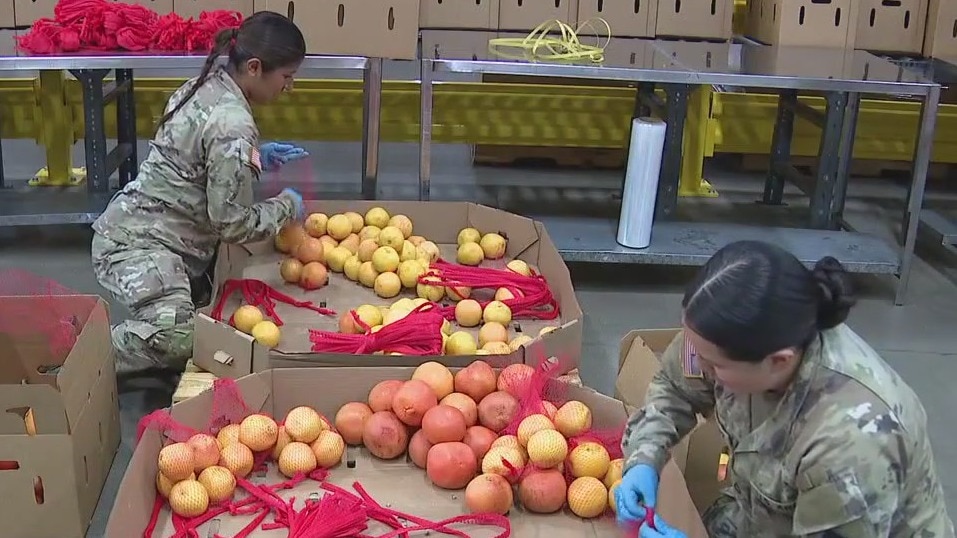
Newsom has since activated the National Guard, but officials warn it's not enough.
The Source: This report is based on explicit confirmation from the USDA that the SNAP benefits will be suspended on November 1st due to the ongoing government shutdown. We also sourced information directly from official statements and legal actions by state leaders, including the lawsuit announced by California Governor Gavin Newsom and Attorney General Rob Bonta, and publicly available resource information from state and local departments (like LA County Department of Parks and Recreation, LAUSD) and non-profit partners (like DoorDash’s Project DASH) to provide actionable steps for emergency assistance.