

$26M Skid Row campus: Violence, drug use surge at 'Meth Mansion' as officials stay silent

Skid Row campus under fire over drug overdoses
The residents and the LAPD say conditions around the 26 million dollar taxpayer funded facility have deteriorated dramatically.
LOS ANGELES - A taxpayer-funded homeless services campus in the heart of Skid Row is at the center of a growing controversy, as dramatic video shows open drug use and drug deals just steps from its entrance. The Los Angeles Police Department reported a surge in violent crime, including four homicides in four months, and community leaders say they warned city and county officials years ago that this was coming.
What we know:
The Skid Row Care Campus, located at 442 S. Crocker Street in Los Angeles, costs approximately $26 million a year to operate, according to the LA County Department of Health Services. It is run by three nonprofits: Homeless Health Care Los Angeles, Social Model Recovery Systems, and Wesley Health Centers. The facility distributes needles, pipes, aluminum foil, and condoms as part of its harm reduction services.
FOX 11 flew Sky Fox over the campus and captured video of people openly using drugs just steps from the entrance. Ground-level video shows LAFD paramedics responding to overdoses outside the facility, people smoking pipes in broad daylight, and drug dealing in the surrounding area.
According to federal tax records reviewed by FOX 11, Homeless Health Care Los Angeles has seen its revenue grow from $3.2 million in 2011 to more than $20.6 million in fiscal year 2024, with nearly 96% coming from government sources.
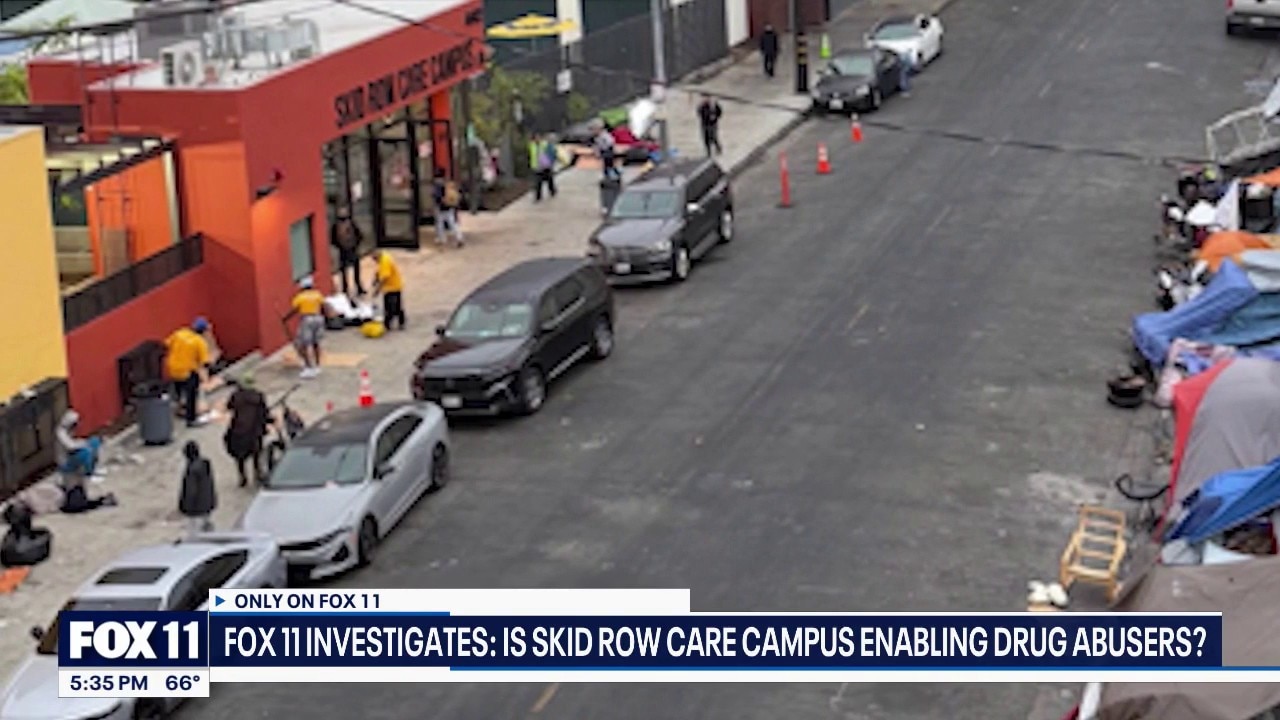
Fox 11 investigates Skid Row's $26 million Care Campus
Skid Row Care Campus, a taxpayer-funded homeless service program, is under fire as police report a drastic surge in violent crime.
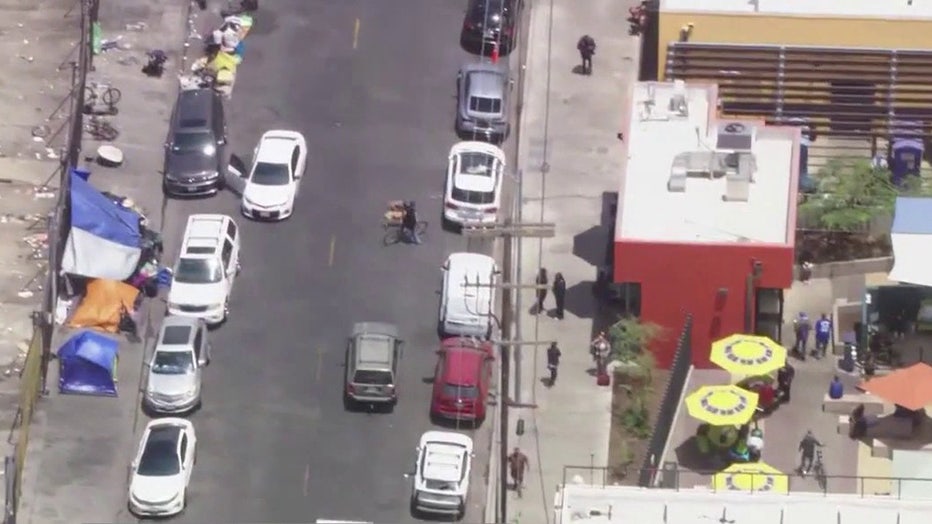
The view outside the Skid Row Care Campus
By the numbers:
The volume of emergency calls and violent incidents surrounding the facility has placed a severe strain on local emergency resources:
- 693: The number of times LAPD officers have responded to the 400-500 block of Crocker Street since January 1, 2026.
- 6: The average number of police calls per day on those two specific city blocks.
- 4: The number of homicides recorded on those two blocks in the first four months of 2026, compared to zero homicides during the same period in 2024 and one in 2025.
- 25%: The overall increase in aggravated assaults within the LAPD's Central Division, with a significant portion concentrated around the Crocker Street campus.
Community advocates, residents, and law enforcement officials expressed deep alarm over the daily conditions surrounding the taxpayer-funded site.
"People are overdosing, people are fighting, people have lit fires. It's just mayhem, 24/7. The size and the scope of this dwarfs what I brought to your attention two years ago. This is a meth mansion," said Estela Lopez, Executive Director of the Downtown Industrial Business Improvement District.
"Any time you have four homicides in the same area, everybody should be alarmed. It shouldn't matter the socioeconomic status of that community. We're talking two small blocks. Four deaths in four months," added LAPD Captain Kelli Muñiz, Commanding Officer of Central Division.
"Open air drug use, open air drug dealing, animal abuse, public lewd sex acts. Anything that you wouldn't want to have in your own neighborhood occurs there on a daily basis. Don't trust the county and the city when they say they want to put some services in your neighborhood and it won't impact your neighborhood negatively, said downtown LA resident David Fleming.
The backstory:
About three years ago, Lopez warned city and county officials about dangerous conditions outside a nearby harm reduction facility also run by Homeless Health Care Los Angeles on 4th Street. After a year of being ignored, she brought her concerns and video evidence to FOX 11, which reported on those conditions in 2024.
The county responded by giving that same contractor a bigger job. When the Skid Row Care Campus opened last August, Homeless Health Care Los Angeles became one of three nonprofits contracted to run it, operating the harm reduction services at the new Crocker Street location.
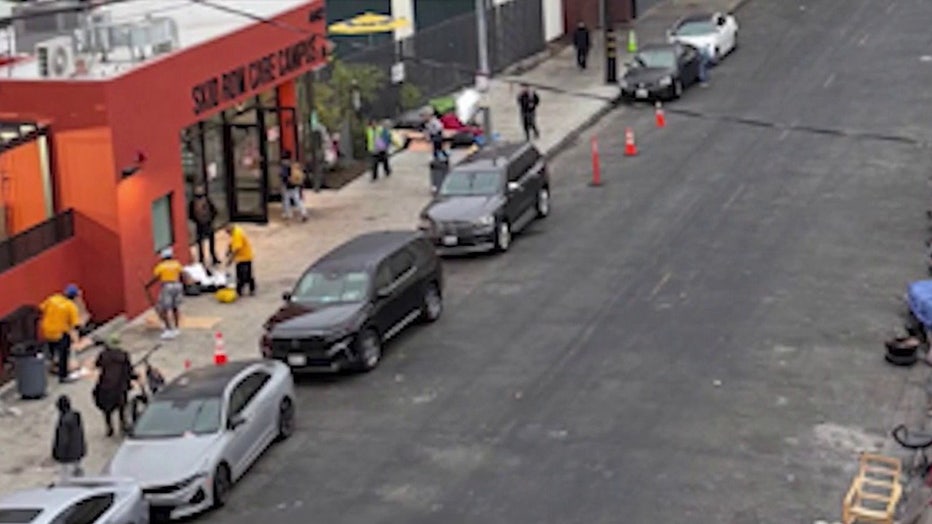
Skid Row Care Campus
Lopez points to the county's own planning documents, reviewed by FOX 11, as evidence that the current situation was foreseeable. The Skid Row Action Plan, developed by the LA County Department of Health Services and approved by the Board of Supervisors, describes the campus as a location designed to be free from law enforcement monitoring. The documents also reference the site as a potential future "safe consumption site" where people could use drugs openly under supervision, an operation that is currently illegal under California law.
The other side:
FOX 11 reached out to all five members of the LA County Board of Supervisors, the body that voted to fund the campus. Not one agreed to an on-camera interview or issued an individual statement. Supervisor Hilda Solis, whose motion created the campus and secured its funding, did not respond directly to inquiries. Solis is currently on the ballot running for Congress to finish out her final term.
The government entities and representatives involved issued written responses regarding the campus operations:
"This is a county-operated facility, and I am aware of and concerned about the problems associated with the campus. I am in discussions with the County about how to resolve these concerns," LA Mayor Karen Bass said in response.
According to Lopez, Bass acknowledged the problems directly during a recent meeting, stating that the county is responsible and has not been cooperative.
Councilmember Ysabel Jurado, whose Council District 14 includes the campus, defended the intent of the facility while bypassing specific questions regarding the homicide spike:
"Everyone in Skid Row – residents, workers, business owners, service providers, and unhoused Angelenos – deserves to be safe and treated with dignity. The Skid Row Care Campus was created through extensive community input... to provide essential services like showers, restrooms, laundry, health care, harm reduction, case management, and respite in a neighborhood that has been neglected for far too long... We cannot solve Skid Row by criminalizing poverty or pushing people from block to block," said Councilmember Ysabel Jurado.

More scenes of violence outside the Skid Row Care Campus
The County of Los Angeles also provided a collective statement defending the platform:
"The County of Los Angeles is committed to safety and security at the Skid Row Care Campus and takes any concerns from businesses and neighbors seriously. We recently increased campus security and expanded outreach on nearby streets to connect individuals to housing and support. We also work closely with LAPD and LA City leaders on the site’s operations."
Local perspective:
The controversy highlights a compounding debate regarding the regional execution of "harm reduction" policies. Harm reduction is a public health approach that aims to distribute clean syringes, pipes, and overdose-reversing naloxone (Narcan) to reduce the negative health consequences of active drug use rather than requiring immediate abstinence.
While proponents argue the methodology saves lives, local critics argue that operating these sites without a mandate for recovery enables addiction. Residents point out that the neighborhood has become unrecognizable, with workers afraid to walk the streets and a "Bermuda Triangle" of drug activity stretching continuously between the Crocker Street facility and the older 4th Street clinic.
What's next:
Community business groups have proposed implementing conditional use permit requirements on harm reduction sites—the same standard currently applied to bars and nightclubs—but the proposal has been met with silence from the council office and the city attorney.
Additionally, requests to establish a "41.18 zone" to ban encampments within 500 feet of the campus and grant police direct enforcement power have not been acted upon by Councilmember Jurado's office. Meanwhile, the campus continues to close its doors at 10 PM daily, a cutoff time that residents say triggers an influx of volatile behavior into the surrounding streets lasting until the morning reopening.