

El Niño surge: Scientists warn strengthening Pacific event threatens to eclipse 2024 global heat records

El Niño, climate change expected to bring record-breaking heat
So far this is only the third-hottest year, behind 2024 and 2025, climate statistics show.
LOS ANGELES - Wildfires are raging across North America and Europe, deadly heat waves have blanketed major cities, and global ocean temperatures have climbed to their highest levels ever recorded for this time of year.
Fueled by a potent combination of human-caused climate change and a rapidly strengthening El Niño, scientists warn that 2026 could ultimately surpass 2024 as the hottest year in modern history.
What we know:
The planet is experiencing extreme weather conditions, marked by wildfires across North America and Europe, deadly urban heat waves, and record-high ocean temperatures.
Currently, 2026 ranks as the third-hottest year on record, behind 2024 and 2025.
However, daily sea surface temperatures have tied or broken 2024 records almost every day since June, with marine heat waves blanketing roughly 82% of the world’s ocean surface, according to the Copernicus Climate Change Service.
RELATED COVERAGE:
- Historic 'Godzilla' El Niño forms: Southern California warned of volatile winter ahead
- Odds increase again for development of brewing Super El Niño by this fall, reaching potential strongest ever
Ocean heat content—a key indicator of human-caused climate change—continues to set all-time high records.
What we don't know:
Scientists disagree on whether 2026 will ultimately take the crown as the single hottest year in modern history.
While former NASA climate scientist James Hansen predicts 2026 will edge out 2024 by year's end, others see it coming close without necessarily surpassing it.
SUGGESTED VIDEO: NOAA issues massive El Niño warning
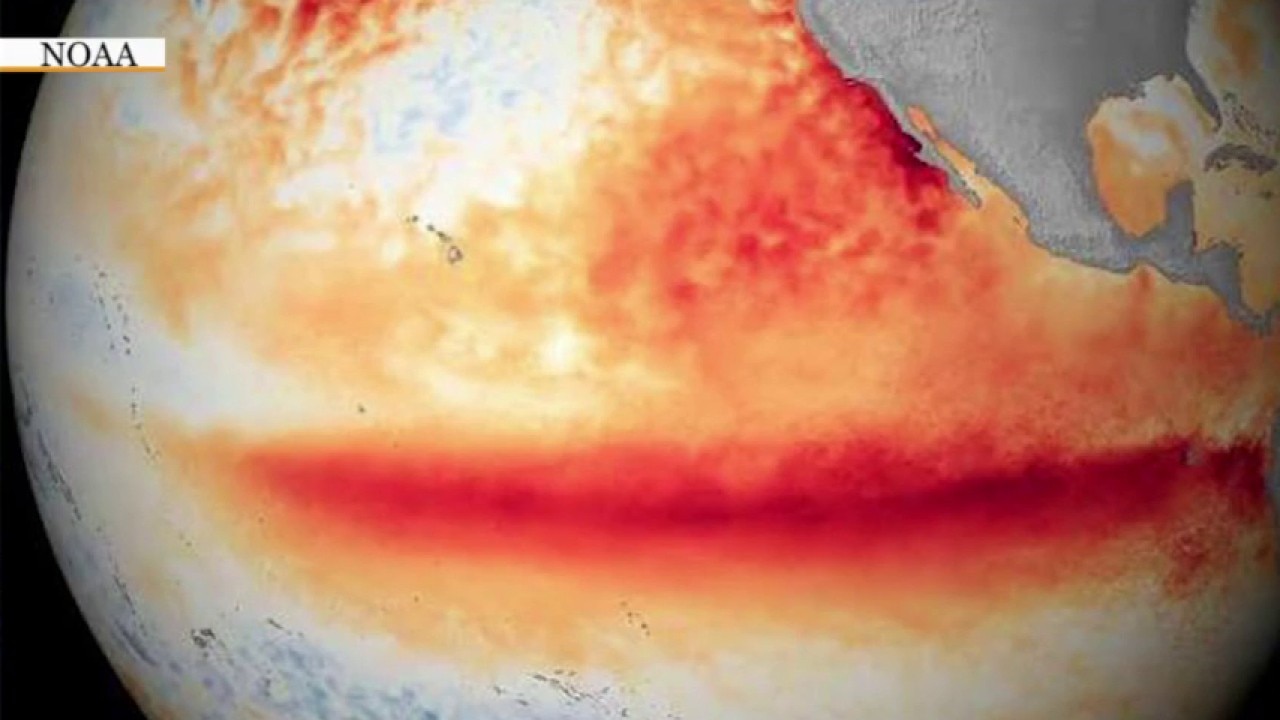
According to a report from the National Oceanic and Atmospheric Administration (NOAA), there is an 81% chance that the current, rapidly intensifying El Niño weather pattern will become "very strong" by autumn. Driven by a combination of natural ocean warming and human-induced climate change, Pacific water temperatures are reaching record levels. This developing phenomenon is expected to bring severe weather impacts between autumn and winter, increasing the probability of droughts, heatwaves, and a wetter winter across the southern United States, while simultaneously weakening the Atlantic hurricane season.
Projections remain in flux as agencies update their probability models to account for the rapid intensification of the forecast El Niño.
What they're saying:
"Because the world was on fire in different ways. The world is now on fire again with climate change in a way that’s increasingly difficult to ignore," said climate scientist Zeke Hausfather of Berkeley Earth. "It’s going to keep getting worse.’'
Zachary Labe, a climate scientist at Climate Central, noted that El Niño events always release pent-up ocean heat, but because greenhouse gases trap heat—with 90% going into the oceans—there is significantly more heat available to release.
What's next:
Because El Niño releases massive amounts of stored ocean heat into the atmosphere, scientists expect global temperature spikes to intensify further toward the end of the year and carry heavy warming momentum into 2027.
The Source: This report is based on climate monitoring data and statistical models provided by major global research institutions, including the U.S. National Oceanic and Atmospheric Administration (NOAA) and Europe’s Copernicus Climate Change Service. Further context and probability calculations come directly from expert analyses by climate scientists at Berkeley Earth, Climate Central, and former NASA climate leadership. The Associated Press contributed.