

California passed a law to curb spikes in gas prices. Why isn’t it using those powers now?
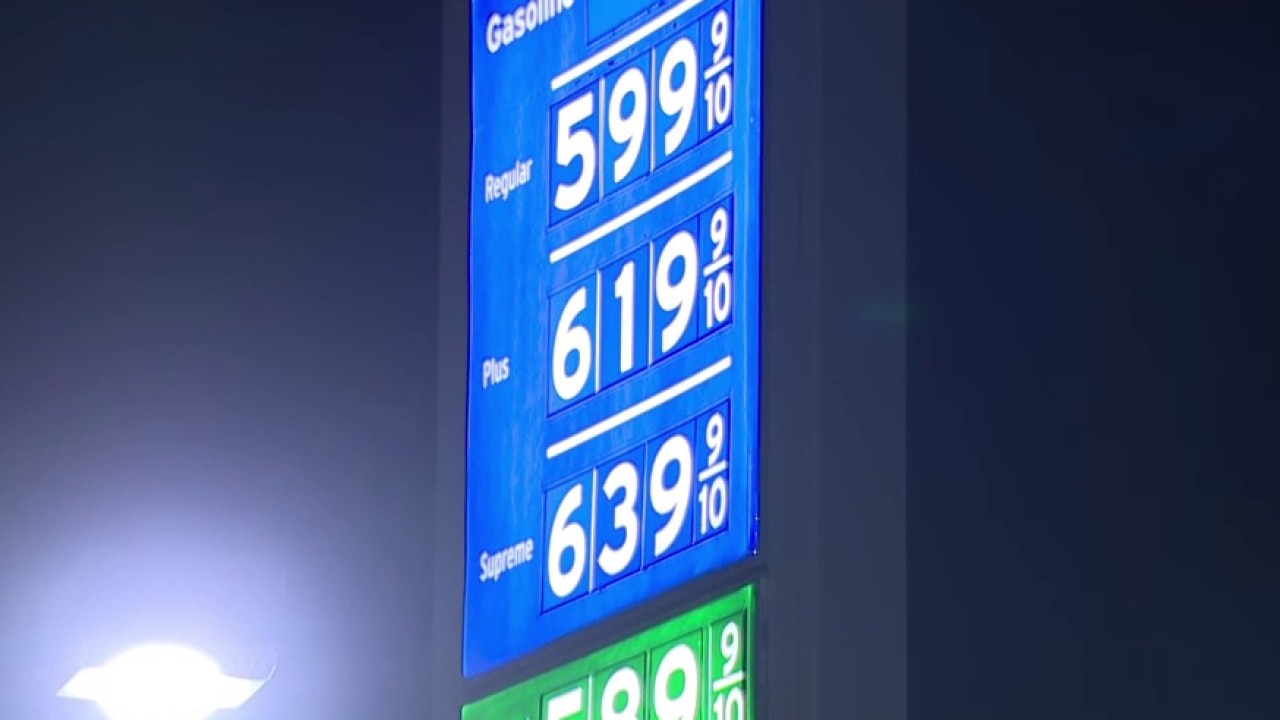
Gas prices keep going up. When will it end?
California drivers continue to experience pain at the pump as part of the ripple effect behind the the United States-Iran conflict.
LOS ANGELES - California’s ambitious plan to "take on Big Oil" has hit a bureaucratic standstill just as drivers face a massive surge at the pump.
While the 2023 price-gouging law was heralded as a win for consumers, the very tools meant to curb "outrageous profits" remain dormant by design.
What we know:
In 2023, Governor Gavin Newsom signed legislation granting the California Energy Commission (CEC) the power to cap refinery profit margins.
But on August 29 of last year, the CEC voted to delay those rules for five years. This decision was largely aimed at boosting "investor confidence" to prevent refiners—like Valero and Phillips 66—from fleeing the state's challenging regulatory environment.
Currently, California's gas prices are being driven upward by two factors:
- Global Conflict: The war with Iran has spiked crude oil prices by over $25 a barrel.
- Structural Issues: California is an "energy island" with dwindling refineries. Valero’s Benicia refinery, which provides 10% of the state's fuel, is set to close next month.
What they're saying:
Jamie Court, president of Consumer Watchdog, argues that the governor "panicked" and left the state without the "hammer" it needs during this crisis.
"These are the moments we need them," Court said, referring to the profit-cap rules.
SUGGESTED:
- Inflation holds steady as consumer prices rose 2.4% in February - See what's costing more at the grocery store
- Southern California gas prices surge to highest levels since early 2024: See a county-by-county breakdown
- Oil prices spike as Iran war intensifies: What to know
On the other side, UC Berkeley energy economist Severin Borenstein warns that aggressive regulation could backfire.
"As much as people don’t like high gasoline prices, they really, really hate gas lines," Borenstein noted, suggesting that profit caps might trigger supply shortages. Meanwhile, Zachary Leary of the Western States Petroleum Association maintains the real issue is the loss of 17% of the state's refining capacity.
What's next:
The CEC has the authority to rescind the five-year delay if they choose to move forward with the rules sooner.
Advocates are pushing for immediate implementation of profit caps and higher fuel inventory requirements.
Long-term, the state is looking into converting closing refineries into fuel import terminals and exploring the "Western Gateway Pipeline" to bring in cheaper gasoline from the Midwest—a first for California.
In the worst-case scenario, if the Strait of Hormuz remains closed, analysts warn prices could approach $10 per gallon at some stations.
The Source: This report is based on an Associated Press report that analyzed California Senate Bill X1-2 (2023), official voting records from the California Energy Commission’s August 29 meeting, and market data from the Stanford Institute for Economic Policymaking. Expert testimony was drawn from UC Berkeley’s Energy Institute and Consumer Watchdog.