

Radioactive wasp nest found at former nuclear weapons site
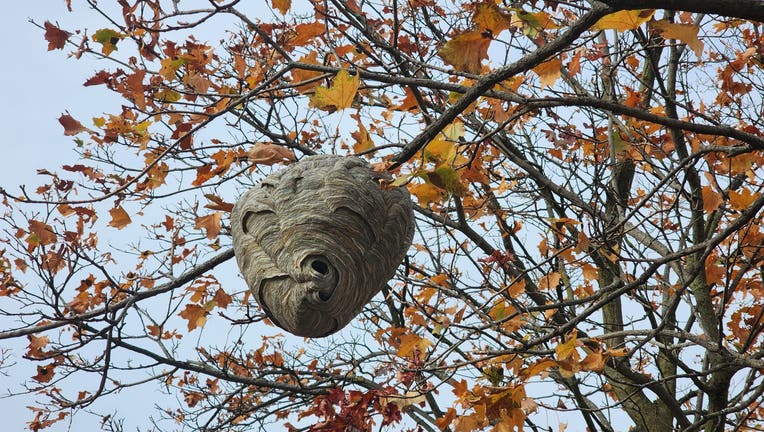
FILE - Paper wasp nest (Photo by Creative Touch Imaging Ltd./NurPhoto via Getty Images)
A radioactive wasp nest has been discovered at a site in South Carolina where liquid nuclear waste is stored.
According to a report from the Department of Energy, workers who check radiation levels at the Savannah River Site near Aiken found the nest on July 3. The site was used to make key parts for nuclear bombs.
Radioactive wasp nest
What we know:
The radiation levels in the nest were 10 times higher than what’s allowed by federal regulations, officials said.
RELATED: Which countries have nuclear weapons - and how many?
The workers sprayed the nest with insect killer, removed it and disposed of it as radioactive waste. No wasps were found, officials said.
What we don't know:
The report did not say which type of wasp nest was found, whether it was made of dirt or other materials. Savannah River Site Watch, a watchdog group, said knowing the type of wasp nest could help pinpoint how the nest became contaminated.
What they're saying:
The report said there is no leak from the waste tanks, and the nest was likely radioactive through what it called "onsite legacy radioactive contamination" from the residual radioactivity left from when the site was fully operational.
The other side:
Savannah River Site Watch said the report doesn't say where the contamination came from, and they question whether the report was accurate about there being no leaks at the site.
RELATED: Nuclear waste being transformed into promising cancer treatment
"I’m as mad as a hornet that SRS didn’t explain where the radioactive waste came from or if there is some kind of leak from the waste tanks that the public should be aware of," Clements said.
Is the nest dangerous?
The tanks where the wasp nest was found are well within the boundaries of the nuclear waste site. Since wasps generally fly just a few hundred yards from their nests, there’s likely no danger they are outside the facility, Savannah River Mission Completion said in a statement.
If there had been wasps found, they would have significantly lower levels of radiation than their nests, according to the statement which was given to the Aiken Standard.
Savannah River Site
The backstory:
The site opened in the early 1950s to manufacture the plutonium pits needed to make the core of nuclear bombs during the start of the Cold War with the Soviet Union. Decades later, the site has shifted toward making fuel for nuclear plants and clean up.
By the numbers:
The site generated more than 165 million gallons of liquid nuclear waste, with about 34 million gallons remaining on the site, according to Savannah River Mission Completion.
There are still 43 of the underground tanks in use; eight have been closed.
The Source: This report includes information from The Associated Press.