

Ladera Ranch families demand answers as concerns grow over rare cancer cases
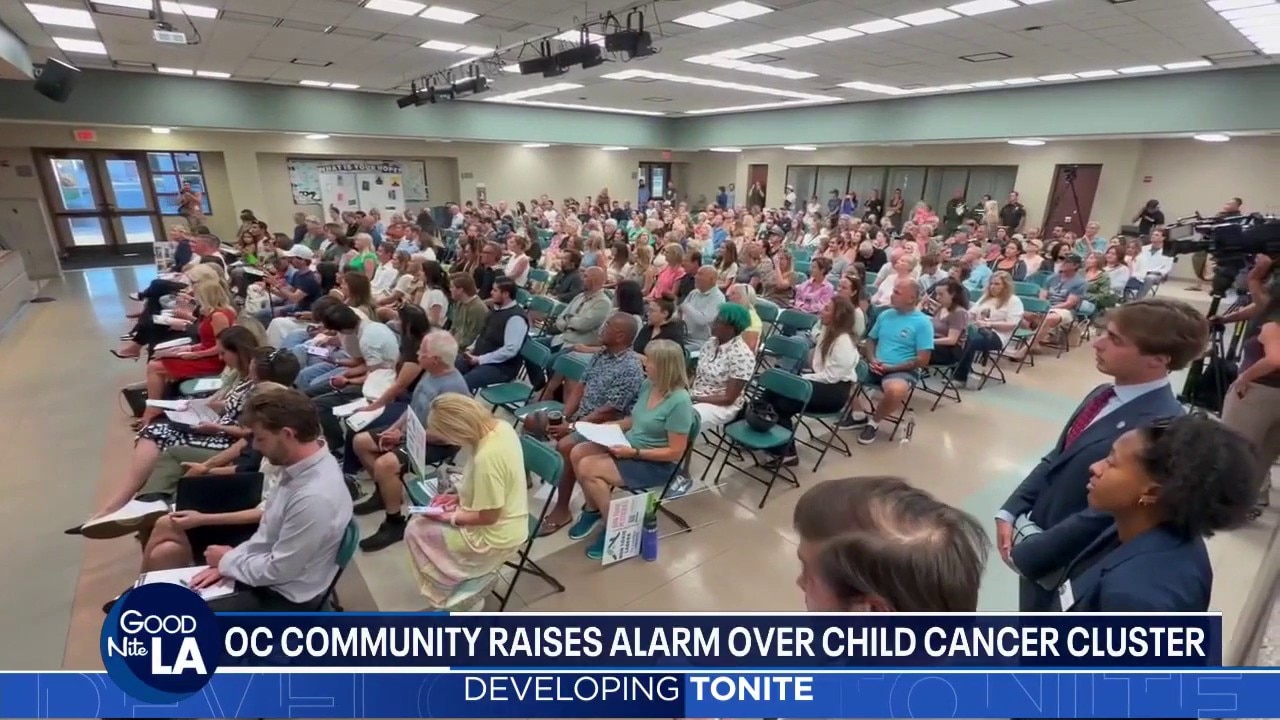
OC community raises alarm for child cancer cluster
Hundreds of residents packed a community town hall Tuesday night, demanding answers and a broader investigation after a growing number of children and young adults connected to Ladera Ranch were diagnosed with an extremely rare form of cancer.
ORANGE COUNTY, Calif. - Hundreds of residents packed a community town hall Tuesday night, demanding answers and a broader investigation after a growing number of children and young adults connected to Ladera Ranch were diagnosed with an extremely rare form of cancer.
The emotional meeting centered on reports of at least six young people linked by community members to Ewing sarcoma, a rare cancer that affects about 200 children and teens nationwide each year.
Among those addressing the crowd was Brian Dalton, whose daughter, Lily Dalton, died in January at age 23 after battling a rare cancer. Genetic testing found her tumor carried a Ewing sarcoma gene fusion, making her family's story a rallying point for residents seeking answers.
"Why are so many children and young adults developing incredibly rare cancers in the same community?" Dalton asked.
Fighting back emotion, Dalton said he hopes no other family experiences what his has endured.
"I don't want another mother holding her child's hand through endless treatments, praying for one more birthday," he said. "I don't want another family planning a funeral instead of a future."
Orange County Supervisor Katrina Foley said she has renewed calls for the California Department of Public Health to investigate the reported cases after an earlier request did not move forward.
"We had asked the state to investigate this a year ago," Foley said. "They came back and told us there wasn't sufficient concern about the area."
When residents asked if Orange County was conducting its own investigation into the cancer cases, Foley said the review falls under the state's jurisdiction.
"This is a State of California public health issue. It's the State Department of Public Health," Foley said.
While health officials have not confirmed a cancer cluster and have not identified a cause, many residents voiced concerns that repeated exposure to pesticides and herbicides used in community landscaping could be a factor.
"These guys with hazmat suits are practically spraying us," one resident told the crowd.
Brent Linas, with the Orange County Creek Team, urged officials to examine whether repeated exposure to landscaping chemicals could pose health risks.
"Herbicide is a silent assault," Linas said. "It's something you don't even know occurs."
In response to residents' concerns, the Ladera Ranch Maintenance Corporation announced a 60-day pause on the routine use of certain pesticides and herbicides while it reviews its landscaping practices. The HOA has described the move as a precautionary measure and has not suggested the chemicals are linked to the reported cancer cases.
Dalton said the temporary pause is only the beginning.
"I'm not a scientist. I'm not here to tell anyone what the cause is," he said. "But I am saying we need to investigate."
The calls for answers are expanding beyond the local level. U.S. Attorney Bill Essayli has asked the Environmental Protection Agency to investigate possible environmental factors, while state public health officials continue reviewing the reported cases.
Health officials emphasize that the investigation remains ongoing and that no environmental cause has been identified.