

These are the greenest cities in the U.S. in 2025, data shows
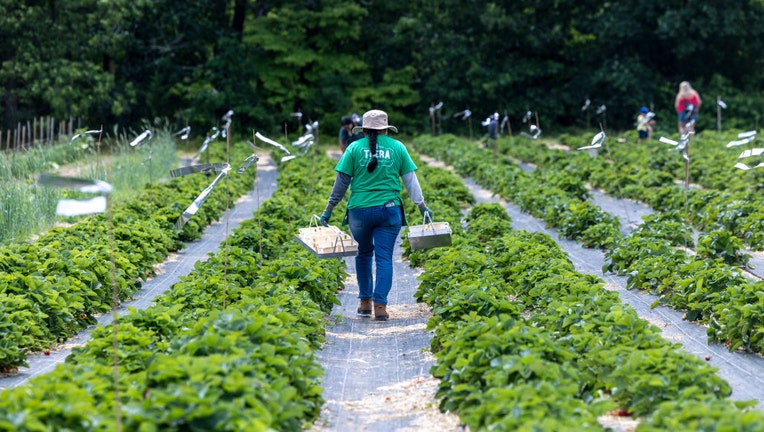
FILE-Farmers manage crops at a farm in Brentwood, New York. (Photo by Alejandra Villa Loarca/Newsday RM via Getty Images)
Taking care of the environment extends beyond just recycling goods, but it also encompasses other greener practices, including energy and water conservation or making your home eco-friendly with solar panels.
There are a multitude of ways to perform environmental habits and WalletHub’s new report looks at cities nationwide that have adopted a greener lifestyle.
RELATED: Which US city is the healthiest to live in?
The personal finance website created a ranking of the greenest cities in the country by comparing the 100 most populated cities using four categories: environment, transportation, energy sources and lifestyle and policy.
Top 10 greenest cities in the U.S.
Why you should care:
WalletHub did a breakdown of the greenest cities not only through its four tiers but also 28 metrics, with each one graded on a 100-point scale, with a score of 100 representing the greenest city.
- San Jose, California
- Washington, D.C.
- Oakland, California
- Irvine, California
- San Francisco
- Honolulu, Hawaii
- San Diego
- Minneapolis, Minnesota
- Portland, Oregon
- Seattle
- Fremont, California
- St. Paul, Minnesota
- Denver
- Sacramento
- Boston
- Madison, Wisconsin
- Chula Vista, California
- Anaheim, California
- Buffalo
- Bakersfield, California
To see WalletHub’s full list of cities, click here.
WalletHub’s analysis of the top greenest cities
Dig deeper:
San Jose, California, Washington, D.C., and Oakland, California made WalletHub’s top three, and the team gives their assessment for their selections.
San Jose, CA
San Jose earned the top spot as is the greenest city in the U.S., partially because it has the fifth-highest number of solar panel installations per capita. According to WalletHub, more than 47% of the city’s electricity comes from renewable sources, the fifth-highest percentage in the nation.
The city also has the fourth-lowest Urban Heat Island Effect Index in the U.S., meaning there’s only a small difference between the average temperature in San Jose and its less-developed surroundings. Researchers in the report explained that the use of green energy in the city helps to prevent the area from becoming extremely hot.
Washington, D.C.
Washington, D.C. ranks second on the list because the report found that residents tend to grow their own food or purchase it locally.
According to WalletHub, the city leads the nation when it comes to the number of Community Supported Agriculture groups (CSAs) and community garden sites per capita and has the 12th-most farmers’ markets per capita.
The area also has 48% of its energy from renewable sources, the fourth-highest percentage in the U.S., the 18th-most alternative-fuel stations for cars and the ninth-most solar panel installations per capita.
WalletHub noted that D.C. residents also do an adequate job conserving water, with the nation’s fifth-lowest daily water consumption per capita.
Oakland, CA
Oakland, California is third on the list with the second-lowest greenhouse gas emissions and the 15th-best air quality in the U.S. WalletHub explained that Oakland has one of the lowest light pollution levels in the U.S.
The city also has a bike sharing program, along with the 20th-most bicycle lanes and paths per capita, which makes it convenient for residents to travel without driving a car and burning gas. The report noted that Oakland has many community garden sites and farmers’ markets in the area. It also has the 23rd-most green job openings per capita.
The Source: Information for this story was provided by WalletHub, which ranked the cities in four categories using 28 metrics, with each one graded on a 100-point scale, with a score of 100 representing the greenest city. This story was reported from Washington, D.C.