

DACA recipient loses job over permit delay, turns to selling burritos in North Hollywood
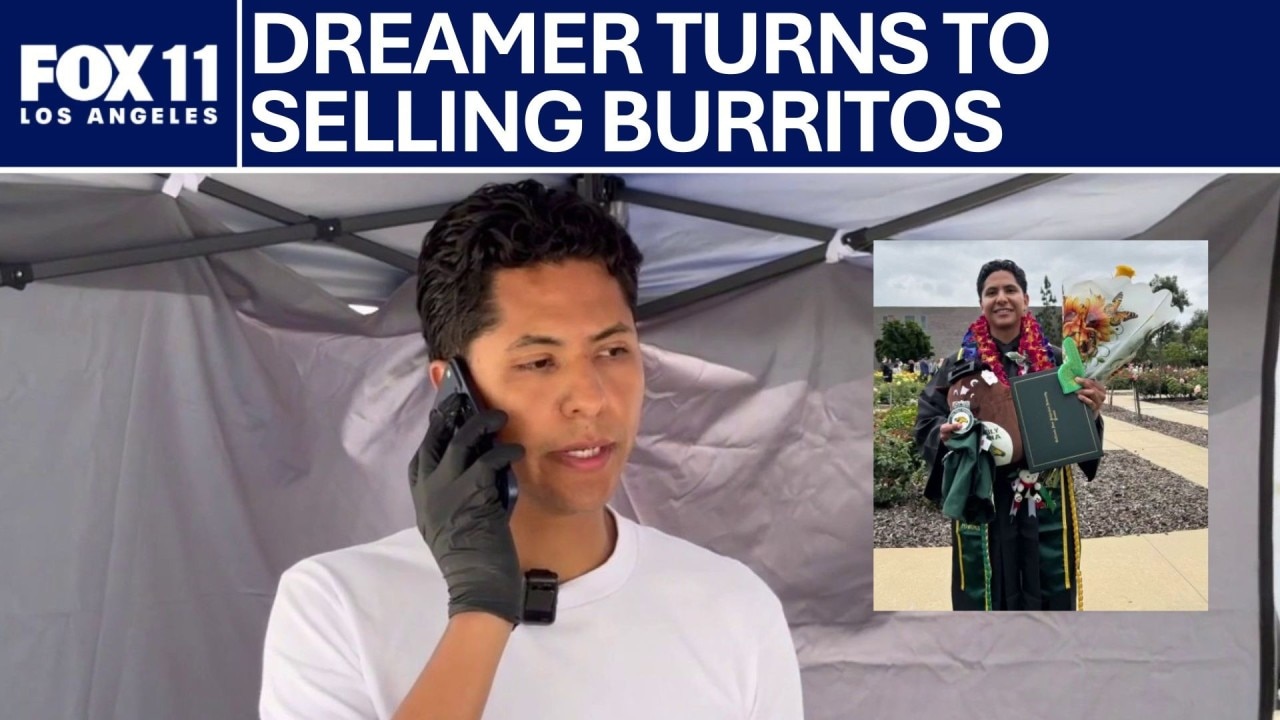
DACA delay costs 'Dreamer' job
After losing his job, Cesar turned to selling burritos in North Hollywood, drawing community support while urging others not to give up.
LOS ANGELES - The sound of eggs cracking on a hot griddle now marks the start of Cesar’s workday. Just weeks ago, he was sitting behind a desk, working in human resources for a manufacturing company.
It was the career he studied for after graduating from Cal Poly Pomona.
"I love the job, it’s what I studied, it’s what I went to college for," Cesar said.
That career came to a sudden end, not because of job performance, but because of a delay in federal paperwork. (NOTE: We are identifying Cesar by his first name only and not naming his former employer to protect him from potential retaliation tied to his immigration status.) Cesar is a recipient of Deferred Action for Childhood Arrivals, or DACA, a program that allows certain undocumented immigrants brought to the U.S. as children to live and work legally. Recipients must renew their work permits every two years.
This time, Cesar’s renewal didn’t come through in time, even though he applied four months in advance. Without a valid permit, federal law required his employer to terminate him. There is no grace period.
"My thought process was, what am I going to do for money? We have a mortgage to pay," Cesar said. "Not only did I lose my job, my sister also lost her job."
His sister, also a DACA recipient and a graduate of the University of California, Berkeley, had been working at a law firm before losing her job under similar circumstances.
Immigration attorney Jose Osorio says cases like Cesar’s are becoming more common. "Some delays are taking about a year," Osorio said. He says what was once a relatively predictable renewal process has become increasingly uncertain, leaving recipients without income and, in some cases, at risk of immigration enforcement. "The fees went up last year for DACA renewals, and yet the processing times are slower than ever," Osorio added.
According to U.S. Citizenship and Immigration Services, most DACA renewals were taking about 122 days as of late April, but that timeline is growing. Some federal lawmakers say applicants are waiting six months or longer. California is home to more than 141,000 active DACA recipients, the largest number in the country.
For Cesar, the delay has forced a complete pivot. "I barely sleep now," he said. "As soon as I’m done with this, I have to go to the grocery store, buy the meat, go home, cut it ... make the salsa." Now, he spends his days cooking and selling burritos in North Hollywood, relying on social media to bring in customers.
After sharing his story online, support began to grow. Customers are now making the trip to buy his food and show solidarity. "I just heard his story, and I feel there’s a lot of people out here with similar stories," said customer Danny Espinal. "It’s unfortunate."
U.S. Citizenship and Immigration Services issued the following statement: "Under the leadership of President Trump, USCIS is safeguarding the American people by more thoroughly screening and vetting all aliens, which can lengthen processing times."
Osorio advises DACA recipients to apply for renewals at least one year in advance to avoid lapses in work authorization, though even early applications no longer guarantee timely approval.
Cesar says the experience has been overwhelming, but he’s focused on staying afloat while he waits for his paperwork. He’s also sharing a message with others facing similar uncertainty. "Don’t give up," he said. "Even though your back’s against the wall ... don’t give up. Try something new."