

5 of America's greatest medical breakthroughs revealed as the nation marks 250 years
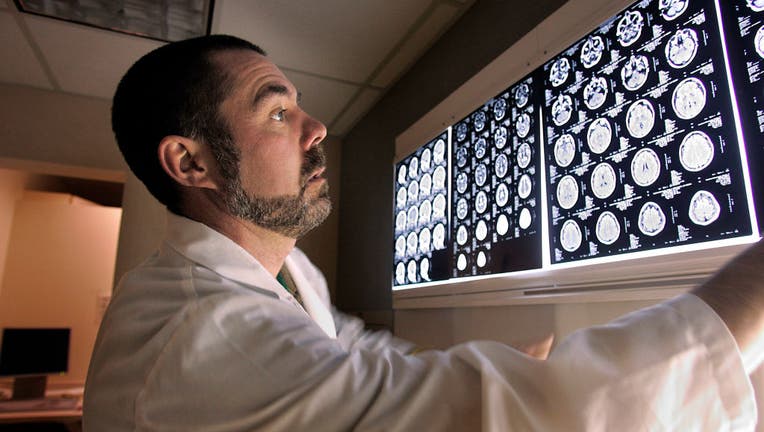
(Photo By Liz Hafalia/The San Francisco Chronicle via Getty Images)
America has been at the forefront of medical innovation since the nation's founding in 1776.
From groundbreaking surgeries to cancer breakthroughs, U.S. physicians have helped transform nearly every field of medicine.
As America marks its 250th anniversary, experts are highlighting some of the most influential medical innovations in the nation's history.
No. 1: Orthopedic care
John Uribe, MD, orthopedic surgeon and system chief executive at Baptist Health Orthopedic Care in Florida, said he believes the greatest breakthrough in orthopedics is the evolution of joint replacement surgery, particularly of the hip and knee.
AMERICA'S LIFESPAN HAS DOUBLED SINCE 1776 — EXPERTS REVEAL WHAT CHANGED
"A generation ago, severe arthritis or joint damage often meant a lifetime of pain, limited mobility and loss of independence," he told Fox News Digital.
"Today, orthopedic surgeons can replace a damaged joint with highly durable implants, use advanced imaging and navigation, and increasingly rely on robotic-assisted technology to personalize implant positioning and improve precision."
Today, patients can walk the same day after joint replacement, return home sooner and recover with less disruption than in the past, according to Uribe.
WOMAN WITH ADVANCED ALZHEIMER'S REGAINED SPEECH AND MEMORIES AFTER TAKING MAGIC MUSHROOMS
"Hip and knee replacements, arthroscopic procedures, advanced fracture care and spine treatments have allowed patients to stay active longer and maintain independence as they age," the doctor said. "The biggest impact is that orthopedic care can give people back parts of their lives they thought they had lost."
"For many patients, the goal is no longer just to relieve pain; it is to restore movement, independence and quality of life."
No. 2: Mental health treatment
For most of America’s 250 years, mental illness was largely treated indirectly with medication, or not at all when medication was ineffective, according to Dr. Russ Voltin, a West Virginia-based practicing psychiatrist and medical consultant at BrainsWay.
The biggest breakthrough, Voltin told Fox News Digital, has been neuromodulation therapies like deep transcranial magnetic stimulation (TMS), which are "clinically proven to non-invasively target the brain circuits involved in conditions such as depression and OCD, helping rebalance neural activity at its source."
"Mental health is brain health, and for the first time, we have treatments designed to address it that way."
A generation ago, a patient who didn't respond to medication had very limited options, he said.
"Today, a clinician can offer noninvasive brain stimulation in an outpatient chair – no anesthesia, no sedation, none of the prominent side effects of medication, and all with limited lifestyle interruption."
The FDA recently expanded clearance for an accelerated Deep TMS protocol that shortens the initial phase of depression treatment from about four weeks of daily visits to just six treatment days.
"For someone in a depressive crisis, this is the difference between waiting and getting better," the expert said.
In clinical trials, roughly 78% of patients reached remission and more than 80% were still in remission a full year later.
"As a clinician, that last figure is the one that matters most: People going back to work, repairing relationships and re-entering their own lives, not just scoring better on a questionnaire," Voltin said.
"The biggest shift is that for people who once cycled through medication after medication with no relief, durable recovery is now a realistic goal rather than a hope."
No. 3: Cancer care
Cancer care has advanced dramatically over the past 250 years, with breakthroughs in prevention, screening, diagnosis and treatment transforming patient outcomes.
Leonard Kalman, MD, acting system chief executive at Baptist Health Cancer Care and acting executive medical director at Baptist Health Herbert Wertheim Cancer Institute in South Florida, said one of the most important breakthroughs in oncology is the understanding that "at its core," cancer is a genetic disease.
"Cancer can be driven by inherited germline mutations or by somatic mutations that occur in normal tissue and lead cells to become malignant," he told Fox News Digital. "That discovery has transformed how we understand, diagnose and treat cancer."
Today, physicians can cure certain leukemias and lymphomas that were "once far more difficult to treat," the doctor noted.
NEW BLOOD TEST DETECTS 90% OF AGGRESSIVE PROSTATE CANCER CASES, BEATING CURRENT SCREENINGS
"We can also extend life while preserving quality of life for many patients with metastatic cancers — including diseases such as lung cancer, melanoma and prostate cancer, where treatment options were much more limited a generation ago," Kalman said.
Many of those advances have shifted cancer care toward more individualized treatment, allowing physicians to tailor therapies based on a patient's specific disease.
"Advances in targeted therapies, immunotherapy, molecular testing and supportive care allow physicians to better personalize treatment, manage side effects and help patients live longer with a better quality of life, even when cancer has spread beyond the primary tumor," the doctor said.
No. 4: Cardiovascular care
Tom Nguyen, MD, system chief executive at Baptist Health Heart & Vascular Care and chief medical executive at Baptist Health Miami Cardiac & Vascular Institute in South Florida, highlighted the ability to diagnose heart disease earlier and treat "even the most complex conditions" with safer, more precise and less invasive therapies.
"Cardiovascular disease remains the leading cause of death worldwide, but patients who once might have died in their 40s or 50s are now routinely living into their 80s and 90s with an excellent quality of life," he told Fox News Digital.
Procedures like open-heart surgery, coronary artery bypass surgery, coronary stents, catheter-based valve replacement, advanced imaging and robotic heart surgery have "completely transformed what is possible," according to Nguyen.
"Robotic heart surgery is a powerful example of how far the field has come," he said. "For appropriately selected patients, surgeons can now perform highly complex heart procedures through much smaller incisions using robotic technology that provides exceptional visualization, precision and control."
TEST YOURSELF WITH OUR LATEST LIFESTYLE QUIZ
The biggest achievement, Nguyen said, is not only helping people live longer, but also helping them "live better."
"Today, heart and vascular specialists can perform procedures that would have seemed almost unimaginable just one generation ago," he said. "Patients are surviving heart attacks, valve disease, rhythm disorders and complex vascular conditions at rates that would have been difficult to imagine decades ago."
Success isn't measured only by survival, Nguyen added. "Our ultimate goal is to help patients feel better and return to the lives they enjoy."
No. 5: Neurology
Michael McDermott, MD, system chief executive of Baptist Health Brain & Spine Care and chief medical executive at Baptist Health Miami Neuroscience Institute, said the ability to safely operate on the brain is the greatest advancement in American neuroscience.
"Less than a century ago, a craniotomy was an extraordinarily risky operation, and survival itself was far from guaranteed," he told Fox News Digital. "Today, advances in anesthesia, electrocautery, imaging, surgical navigation, brain mapping and intraoperative neurophysiologic monitoring have transformed brain surgery into a highly precise and much safer procedure."
The ability to treat acute stroke in real time has been "equally transformative," McDermott noted.
"Using advanced imaging and mechanical thrombectomy, physicians can now remove a clot from the brain and restore blood flow before permanent damage occurs in many eligible patients," he said. "At the same time, innovations such as high-intensity focused ultrasound for essential tremor demonstrate how neuroscience has become increasingly precise and less invasive."
CLICK HERE FOR MORE HEALTH STORIES
Today, neuro experts can accomplish tasks that "would have been difficult to imagine just one generation ago," McDermott noted.
"We can remove blood clots from the brain during an active stroke, implant deep brain stimulation devices for Parkinson's disease, and perform highly sophisticated brain and spine surgery using advanced imaging, navigation and artificial intelligence," he said.
Advances like image-guided surgery, intra-operative brain mapping, neurophysiologic monitoring and radio-surgery allow surgeons to remove tumors more safely while protecting areas of the brain responsible for movement, speech and other critical functions, he said.
CLICK HERE TO DOWNLOAD THE FOX NEWS APP
Beyond brain tumors, other advances across neuroscience, like corrective spine surgery, have allowed doctors to restore posture and mobility in patients with severe spinal deformities. Meanwhile, focused ultrasound can "significantly reduce tremors that interfere with everyday activities such as writing, eating or drinking," McDermott noted.
"Increasingly, our goal isn't simply to help patients survive – we're helping them maintain their independence, preserve function and return to the lives they want to live."
Read more of this story from FOX News.