

Civil rights icon, Dolores Huerta, dies at 96
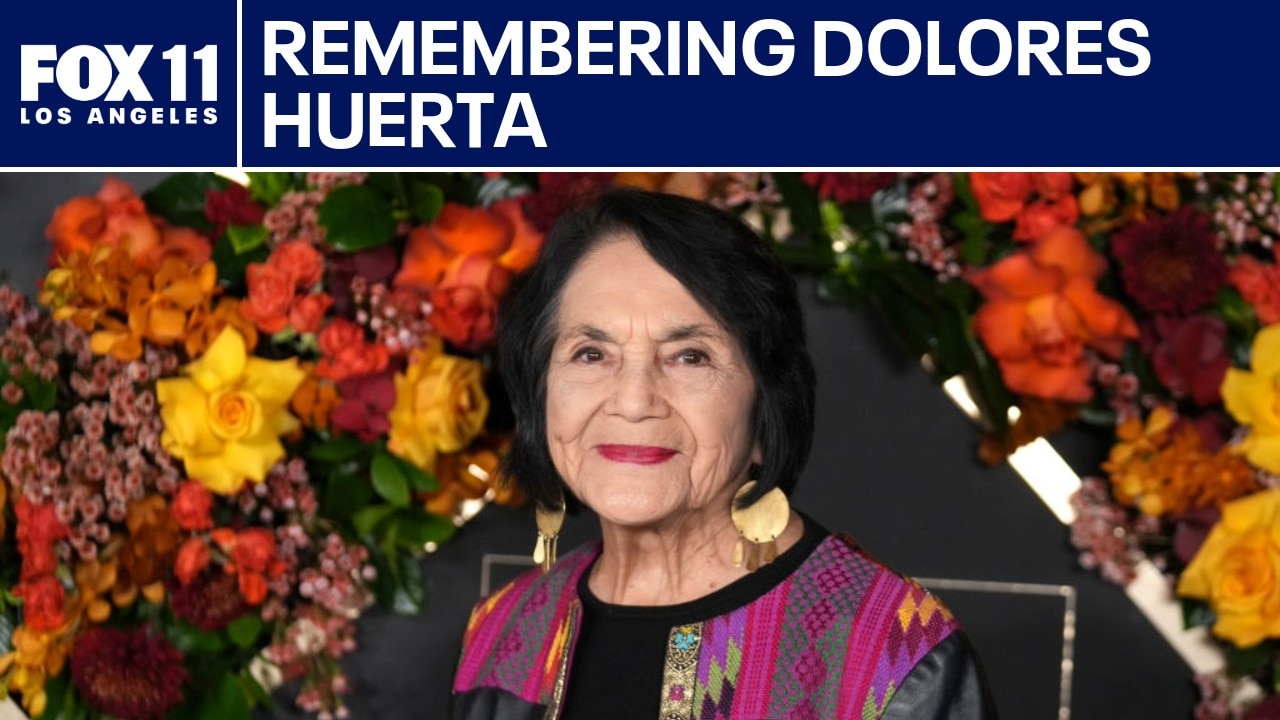
Remembering Dolores Huerta
Good Day LA remembers civil rights icon, Dolores Huerta, who passed away at age 96.
BAKERSFIELD, Calif. - California's iconic labor leader and civil rights activist, Dolores Huerta, has died at the age of 96, her family said on Wednesday.
What we know:
The Huerta family shared the news of her passing on social media.
"As you can imagine, this is an incredibly difficult time for us, and we ask for privacy as we grieve this incredible loss to our family," her family said in a statement. "We know that many of you around the world share in our mourning, and we will be following up on plans to recognize and celebrate her incredible life and legacy."
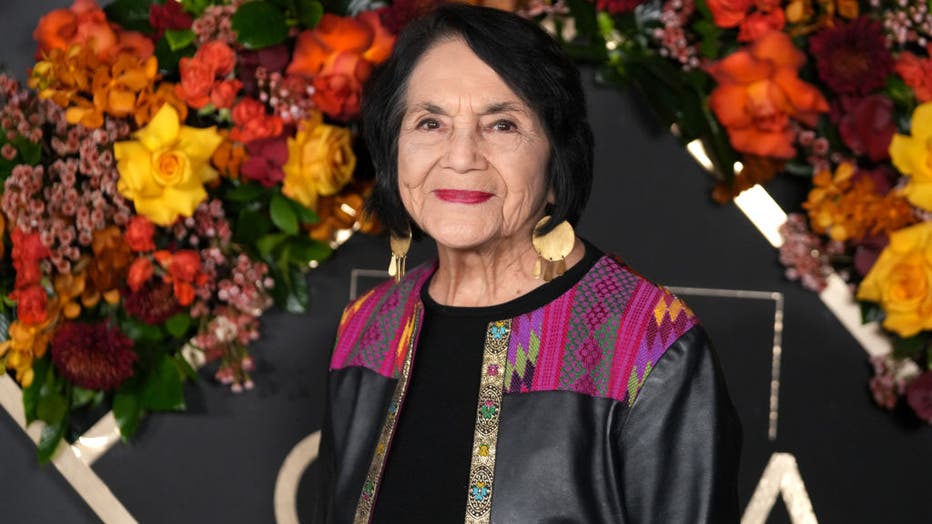
HOLLYWOOD, CALIFORNIA - FEBRUARY 21: Dolores Huerta attends 2025 La Cena Los Angeles: Celebration of Latino Culture at NeueHouse Hollywood on February 21, 2025 in Hollywood, California. (Photo by Presley Ann/Getty Images) (Getty Images)
Huerta was the face of a movement that, for decades, aimed to empower the lives of workers through higher wages, health benefits, pensions and improved safety. She founded that movement with the late César Chávez. The two were at the forefront of the Mexican National Farmworkers Association, which became the United Farm Workers union in 1966.
Earlier this year, she accused him of years of sexual abuse and that he fathered two of her children.
PREVIOUS: Dolores Huerta issues statement amid César Chávez scandal: 'My silence ends here'
The backstory:
Huerta was born in 1930 in Dawson, New Mexico to a union-organizer father and an independent businesswoman mother.
Huerta grew up and went to school in Stockton, Calif., where she experienced and witnessed injustices, prompting her to develop a passion for helping others as she knew to create change meant organizing and using her voice, according to the Dolores Huerta Research Center for the Americas.
Huerta had been an activist for multiple marginalized communities and through her many years of organizing, she famously coined the term Sí, se suede, which President Obama used in the English version as "Yes, we can."
When she began to organize farmworkers, she also became passionate about women’s rights.
Seeing women being mistreated in the fields and other workplaces made her become an ardent feminist leader, as well.
Before she was known as the only woman in the UFW board, she was a community organizer in Stockton, including getting people out to vote, according to the research center.
Huerta had been awarded many honorary doctorates, medals, and awards, including the 2011 Presidential Medal of Freedom recipient, the highest civilian honor in the United States.
She kept a busy schedule well into her 90s, marching in protests and speaking in cities across the country about race, poverty, LGBTQ+ and women’s rights on behalf of her Bakersfield, California-based foundation.
When Obama presented the award in 2012, he praised Huerta as a tenacious leader and joked that he had stolen her slogan for his 2008 campaign.
What we don't know:
A cause of death has not been released.
Local leaders react: ‘My heart is broken’
What they're saying:
Tributes poured in from local politicians following the news of Huerta's passing.
Los Angeles County Supervisor Hilda L. Solis
"My heart is broken by the passing of my dear friend Dolores Huerta. It is difficult to imagine my life in public service without her. For decades, she was a source of strength, a trusted friend and a partner in some of the most important fights of my career. I learned so much from Dolores, and I will forever cherish the time we shared and the privilege of having worked alongside her.
Growing up in the San Gabriel Valley, I rarely saw Latinas in positions of leadership. Dolores was one of the few women who showed me what was possible. I remember seeing the iconic photograph of her holding the ‘Huelga’ sign and drawing strength from her example. She helped me understand that women like us had a place in public life and a responsibility to speak up for those too often ignored. That lesson stayed with me throughout my career.
From the state Legislature to Congress and my time serving in President Barack Obama’s Cabinet, Dolores remained a constant in my life. We joined demonstrations and rallies, stood with workers fighting for their rights and demanded action when people in power looked away. I will never forget her visit to Sacramento while I was working with women farmworkers organizing to form a union. She showed me footage of a farmworker being brutally mistreated. When it ended, she looked at me and said, ‘Let’s get to work.’ That was Dolores. She did not waste time accepting excuses. She focused on what needed to be done.
I carried that same determination when Dolores and I traveled to Ciudad Juárez, Mexico, to demand justice for women who had been murdered or disappeared. We called for accountability for the femicides that devastated families and communities. Dolores understood the importance of showing up, bearing witness and refusing to let the suffering of women go ignored. I will always remember standing beside her in that fight.
This year, Dolores shared painful truths about the sexual abuse she experienced at the hands of César Chávez. Her decision to speak publicly about what she endured deserves to be met with compassion and respect. I stand with Dolores and all survivors who deserve to be heard and treated with dignity. We cannot tell the full history of the farmworker movement without acknowledging the harm women experienced. Dolores helped build that movement, and her contributions must be recognized without being overshadowed by the actions of others.
I was proud to witness President Barack Obama present Dolores with the Presidential Medal of Freedom in 2012. That same year, she joined me for the induction of farmworker activists into the U.S. Department of Labor’s Hall of Honor. In 2024, I authored a motion to proclaim Dolores Huerta Day in Los Angeles County every year on her birthday, recognizing her lifelong commitment to workers’ rights, justice and equality.
Dolores’ influence reached far beyond the labor movement. She inspired generations to organize, speak out and believe they could change their circumstances. Her call, ‘¡Sí se puede!’ became a rallying cry for people fighting for a better future, and I saw firsthand the resolve behind those words. She spent her life reminding us that progress takes persistence and that lasting change comes when people stand together.
I have lost a dear friend whose example will stay with me for the rest of my life. My heart is with Dolores’ family, loved ones and all those who mourn her passing. I will carry our memories with me and honor her by continuing the fight for a more just future. I encourage everyone to support the Dolores Huerta Foundation as it organizes, educates and empowers the next generation of leaders, ensuring Dolores’ legacy lives on through the people and communities she inspired."
Los Angeles City Councilwoman Monica Rodriguez
"Dolores Huerta was the living embodiment of the labor movement. She endured fierce opposition, violence, and institutional hostility, yet stood strong for our community and refused to waver in the fight for farmworkers, women, and working families across this nation. Where others saw insurmountable odds, she organized, mobilized, and demanded justice.
"Her courage laid the foundation for the rights we defend and build upon today. I remain thankful to have had the opportunity to fight alongside her on many occasions. In her honor, we carry forward her unyielding conviction: continuing to organize, speaking truth to power, and unapologetically defending the dignity and humanity of every worker."
Los Angeles County Supervisor Kathryn Barger
"Dolores Huerta dedicated her life to advancing labor rights and ensuring that working families were treated with dignity and fairness. Her leadership helped transform the labor movement and gave a voice to people who had long been overlooked. Her legacy of courage and service will continue to inspire generations. My thoughts are with her family and all those whose lives she touched."
The Source: This report is based on an official statement released by the Huerta family on social media, the Associated Press, the Dolores Huerta Research Center for the Americas, and public memorial statements from local leaders.