

What is denaturalization? DOJ moves to revoke US citizenship for 12 people accused of crimes
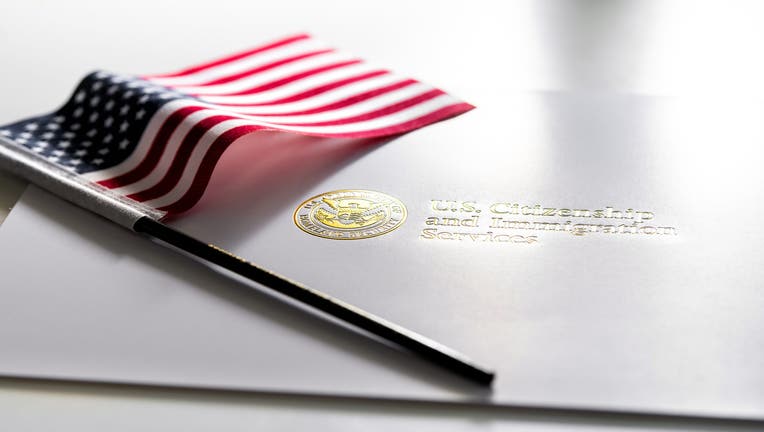
The Department of Justice is moving to revoke citizenship from 12 naturalized U.S. citizens who officials say have committed various offenses, including war crimes, supporting terrorism and sexually abusing a minor. (Getty Images)
The Department of Justice is moving to revoke citizenship from 12 naturalized U.S. citizens accused of various offenses, including war crimes, supporting terrorism and sexually abusing a minor.
Acting Attorney General Todd Blanche described the immigrants as "individuals who should never have been naturalized as United States citizens." Here’s what we know:
Who is DOJ targeting?
The Justice Department says it has filed denaturalization cases against the following men:
- Ali Yousif Ahmed Al-Nouri: An Iraqi-born former owner of a Phoenix driving school accused of killing two Iraqi police officers while serving as an al-Qaeda leader.
- Oscar Alberto Pelaez: A Colombian Roman Catholic priest convicted of 13 counts of sexual assault against a child. Officials say Pelaez lied about the crimes during his naturalization process.
- Khalid Ouazzani: A Morocco native accused of supporting Al-Qaida
- Salah Osman Ahmed: A Somalia native accused of supporting terrorists and joining a terrorist group that killed Ethiopians.
- Baboucarr Mboob: A former Gambian military police officer accused of killing six of his fellow military officers in 1994
- Kevin Robin Suarez: A Bolivia native accused of conspiring to purchase firearms through "straw" buyers and export them to various Latin American countries.
- Abduvosit Razikov: An Uzbekistan native accused of entering into a "sham" marriage to secure permanent residency in the U.S., and also arranging other sham marriages for others to gain entry into the country.
- Abdallah Osman Sheikh: A Kenya-born former U.S. Marine accused of possessing indecent images of minors, and posting one of those pictures to his social media account.
- Debashis Ghosh: An Indian businessman accused of defrauding investors of millions of dollars.
- Pin He): A China native accused of using a false identity to obtain U.S. citizenship after he was ordered to be removed from the country.
- George Oyakhire: A Nigerian man accused of using a false identity to obtain naturalized citizenship in the U.S.
- Victor Manuel Rocha: A Colombia native who was convicted of spying for Cuba.
What is denaturalization?
Big picture view:
Under the Immigration and Nationality Act, a naturalized U.S. citizen’s citizenship may be revoked, and certificate of naturalization canceled, if the naturalization was illegally procured or procured by concealment of a material fact or by willful misrepresentation.
The government generally faces a high burden of proof in revoking citizenship, as federal law requires prosecutors to show convincing evidence that an individual attained citizenship illegally or procured naturalization by "concealment of a material fact or by willful misrepresentation."
Dig deeper:
The denaturalization process was used in only about a dozen cases per year between 1990 and 2017, but the Trump administration has made good on its promise to use it as a tool for increasing deportations.
Last year, the Justice Department issued an internal memo to prosecutors directing them to prioritize denaturalization cases against people who "pose a potential danger to national security," including those involving terrorism and espionage.
By the numbers:
According to The New York Times, the Department of Justice said it filed 130 cases from 2017 to July 2025. Department of Homeland Security officials have since been told to refer 200 cases for denaturalization a month.
What they're saying:
"This Department of Justice continues to file denaturalization actions at record speeds to restore integrity in our naturalization process," Assistant Attorney General Brett A. Shumate, of the Justice Department’s Civil Division, said in a statement. "The disturbing criminal histories confirm these individuals should have never received the privilege of U.S. citizenship. We remain committed to leveraging every tool available under the law to pursue those who obtain their U.S. citizenship unlawfully."
The Source: This report includes information from the Justice Department, The New York Times and The Associated Press.