

Death Valley’s rare 2026 wildflower bloom: Everything you need to know

PREVIOUS COVERAGE: It's going to cost you to see the super bloom in Lake Elsinore
A Southern California city overwhelmed by throngs of visitors seeking out a rare wildflower bloom says it has a parking plan.
INYO COUNTY, Calif. - Death Valley National Park, famously the hottest and driest place in North America, is showcasing its most colorful display in a decade as an unusually wet winter fuels a significant wildflower season.
What we know:
The National Park Service (NPS) shared in a Feb. 22 social media update that "low-elevation flowers are blooming throughout the park."
Park officials said the surge is due to a "perfect recipe" of nearly three inches of rain last fall, followed by consistent winter moisture.
Notable species currently in bloom include Desert Gold, Brown-eyed Primrose, Sand Verbena, and Phacelia.
Current bloom locations and what you can see, according to the NPS, are:
- North Badwater Rd (between CA190 and Badwater Basin): Desert Gold, Brown-eyed Primrose
- South Badwater Rd (near Ashford Mill): Desert Gold, Sand Verbena, Five Spot, Brown-eyed Primrose
- Highway 190 (between Stovepipe Wells and Furnace Creek): Brown-eyed Primrose, Phacelia, Desert Gold, Mojave Desert Star
- North Highway: Phacelia, Desert Gold, Suncups
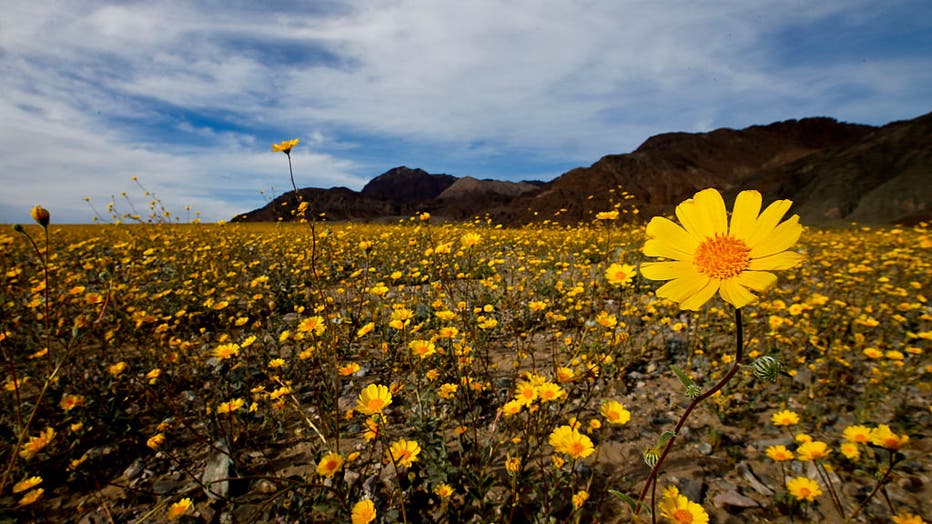
Desert sunflowers cover the desert in the Badwater Basin area off Highway 178 in Death Valley National Park. (Photo by Mark Boster/Los Angeles Times via Getty Images)
What we don't know:
It's unclear how long the lower-elevation bloom will be visible, since it is highly dependent on upcoming weather patterns, park officials said.
SUGGESTED: ‘Please help’: Photos show Toyota Tacoma's destruction of rare Death Valley dunes
While the NPS predicts the flowers will remain until 'mid-late March," officials noted that a sudden heat spike or even the arrival of "harsh desert winds" could dehydrate the delicate sprouts and bring an abrupt end to the floral season.
Timeline:
- Fall 2025: Record rainfall of 2.41 inches hits Death Valley, soaking seeds and washing off protective coatings to trigger sprouting.
- Winter 2025–2026: A dramatically wetter season compared to previous years provides the steady moisture needed for root development.
- February 22, 2026: NPS officially categorizes the season as an "above-average bloom year."
- Mid-to-Late March 2026: Expected window for the end of low-elevation blooms.
- April–June 2026: Predicted window for wildflower activity at higher elevations in the park.
What they're saying:
NPS officials noted the rarity of the event, stating, "Although there aren’t as many flowers as in past ‘superbloom’ years, there are far more flowers than we have most years."
What you can do:
Visitors planning to witness the bloom should head toward North and South Badwater Road or Highway 190 between Stovepipe Wells and Furnace Creek for the best current views.
The NPS has issued a firm reminder to visitors: "Don’t pick. Collecting wildflowers is strictly prohibited."
Visitors are also advised to stay on clear established paths to protect the fragile root systems.
Don't forget to carry an adequate amount of water, as the dry moving air can quickly dehydrate hikers even during a bloom.
The Source: This report is based on information provided by the National Park Service.