

US researchers evacuated from Antarctica in daring rescue mission
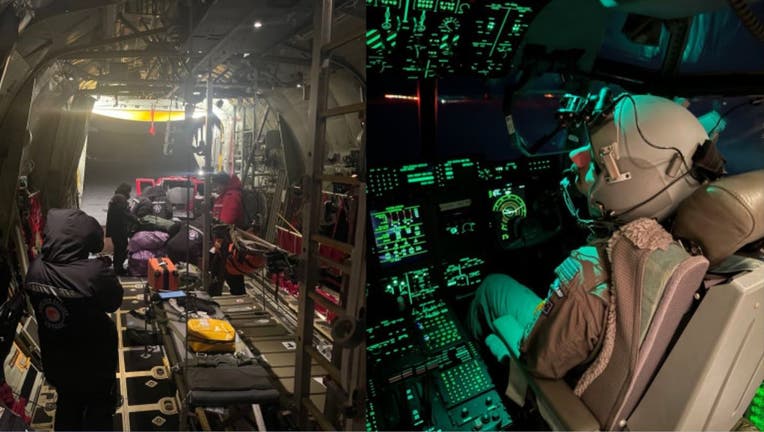
Credit: Royal New Zealand Air Force
It was a daring and dangerous rescue mission. Three people based at the United States' McMurdo Station in Antarctica were rescued by the Royal New Zealand Air Force after requesting urgent medical care.
What we know:
According to a statement issued by the Royal New Zealand Air Force (RNZAF), three people from the US' National Science Foundation were unable to receive the medical care they needed in the area and had requested to be evacuated from the base.
Officials with RNZAF said extreme-cold temperatures and landing on ice in the dark made the mid-winter flight to Antarctica one of the most challenging for their crew to perform. During wintertime in Antarctica, some areas experience 24-hours of darkness.
"The crew can only attempt the flight after detailed analysis of the weather and airfield state. The United States Antarctic Program Winter Team must physically create the runway before we can depart by ensuring the ice is groomed and suitable for landing. Although they determine it is safe, it's still an extremely challenging environment to fly in on Night Vision Goggles due to the extreme weather conditions, which are highly changeable at this time of year and makes accurate forecasting a challenge," said Air Component Commander Air Commodore Andy Scott.
Once on the ice, crews had to keep the aircraft's engine running in order to keep them warm while they refueled.
RNZAF said the entire medical evacuation took about 19.5 hours to complete.
The three people were airlifted to Christchurch, New Zealand for medical treatment. Their exact injuries are not known.
According to the National Science Foundation, the McMurdo Station is the largest of the U.S. year-round stations and the largest station on the continent. It is the central logistical hub for the U.S. Antarctic Program (USAP), supporting research on the continent and at NSF Amundsen-Scott South Pole Station.
The Source: Information for this story came from a press release issued August 6, 2025 by the Royal New Zealand Air Force.