

Outdated FAA systems blamed for flight disruptions as officials seek $30B modernization funding
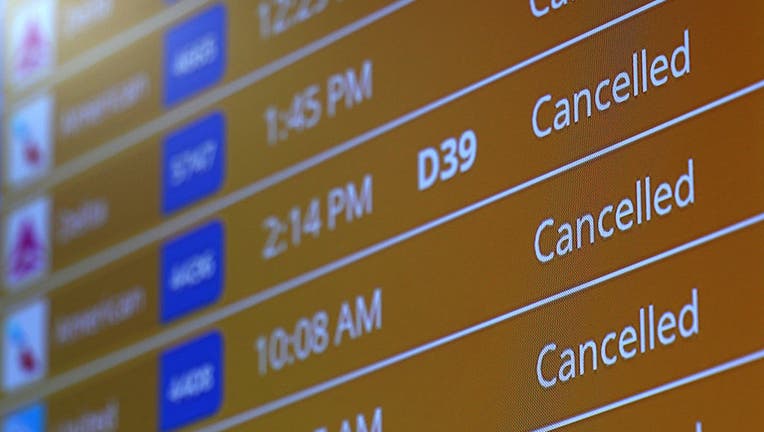
Flight cancellations are displayed on a bulletin board at Ronald Reagan Washington National Airport. (Photo by Alex Wong/Getty Images)
WASHINGTON - America’s aging air traffic control system — dependent on outdated telecommunications networks, decades-old Compaq computers and replacement parts purchased on eBay — continues to suffer major failures, according to Reuters.
Thousands of flights across the densely populated Northeast were delayed or canceled Monday after two separate problems: a circuit failure at an air traffic facility in Philadelphia and the accidental severing of a fiber-optic cable near New Brunswick, New Jersey, by a construction crew.
What they're saying:
"The architecture of our telecom is still a 40-year-old architecture, which means you could have a switch go down and a line be cut yesterday and the Northeast goes down," U.S. Transportation Secretary Sean Duffy said Tuesday.
RELATED: TSA alert: Your carry-on bag may need to be checked after all
Dig deeper:
The disruption highlighted the vulnerability of the nation’s air traffic control network after decades of delayed modernization efforts, inadequate funding and temporary fixes.
Despite billions of dollars already spent or approved, the Federal Aviation Administration continues to rely on aging and often incompatible systems. A single equipment failure or severed cable can trigger widespread flight disruptions — a risk officials say will remain without a much larger overhaul.
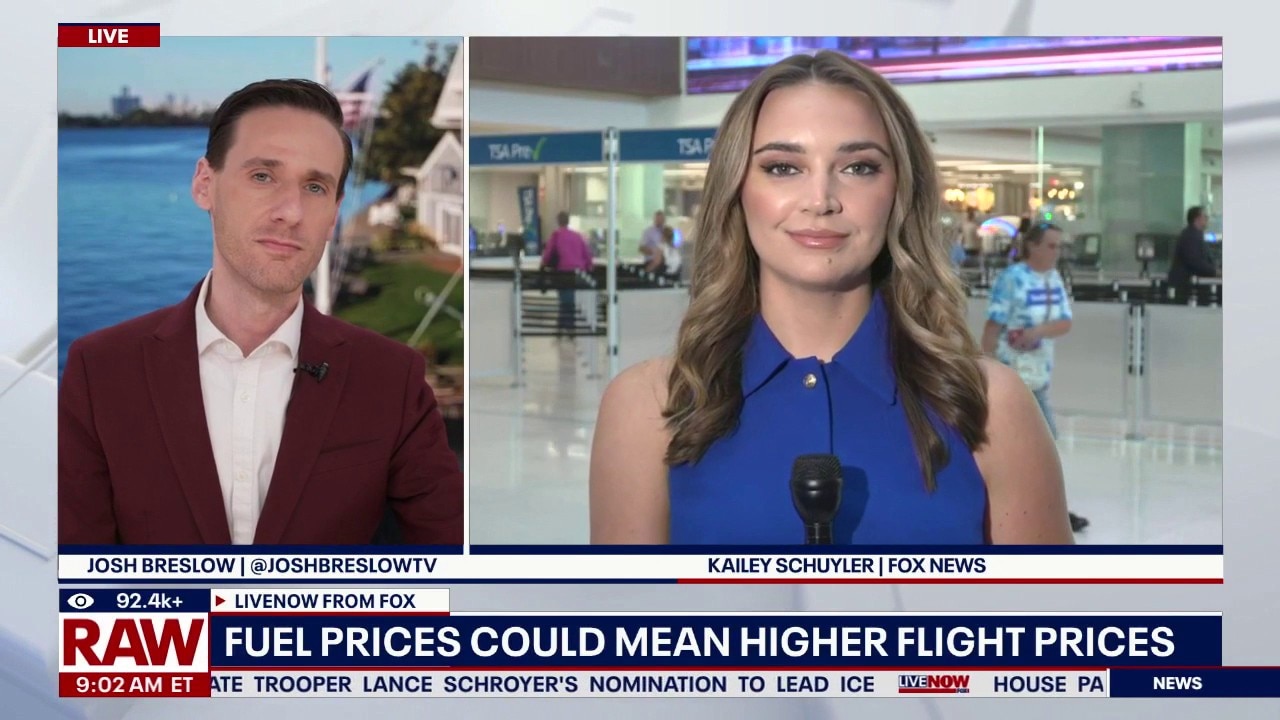
Fuel prices could mean higher flight prices
Airlines are planning to cut flights later this year. Fox News' Kailey Schuyler reports that means there could be higher flight prices.
In January 2023, all flights departing the U.S. were grounded for the first time since the Sept. 11, 2001, terrorist attacks after a contractor accidentally deleted computer files, affecting a key database used to send messages to pilots. The outage disrupted 11,000 flights before the problem was resolved.
In September 2025, more than 2,000 flights were delayed and hundreds were canceled at two Dallas-area airports after a contractor cut fiber-optic lines, causing a telecommunications outage that affected airport communications systems. The incident disrupted flights for 100,000 American Airlines (AAL.O), opens new tab passengers alone.
RELATED: Popular South Pacific destination declares HIV emergency as infections surge 12-fold
A series of serious technology failures prompted Congress last year to approve $12.5 billion for air traffic control modernization. Duffy said Tuesday that he wants another $30 billion to complete the upgrades and repair aging facilities.
"These incidents will continue to happen unless we get the resources and actually build the architecture fit for the 21st century," Duffy said.
Britain has also experienced major air traffic control outages this month, prompting airlines to question the resilience of its systems.
The FAA has resorted to 3D printing and eBay to find replacement parts for some of its aging systems. In other cases, the agency can no longer obtain spare parts.
The Government Accountability Office said in 2024 that the FAA needed to take "urgent action" to address aging air traffic control systems, noting that one-third of those systems are unsustainable.
Big picture view:
The FAA operates more than 300 air traffic facilities that cannot communicate directly with one another and rely on individual analog computers. "Every facility is a silo," FAA Administrator Bryan Bedford told Reuters in a recent interview. "We're behind 20 years."
Bedford said many FAA towers effectively operate on individual Compaq computers. The company, which was acquired by HP, stopped producing computers in 2013.
The FAA also relies on outdated telephone systems and three telecommunications networks that do not work together. That creates a "clunky connection" that can frequently cause delays, Bedford said.
At the same time, the U.S. manages the world’s most complex airspace while facing a shortage of several thousand air traffic controllers.
RELATED: Major airlines adjust flight schedules as jet fuel prices surge
One major change is expected in late 2027, when the FAA plans to transition air traffic control communications from analog to digital technology. The agency will later move facilities away from individual computers and onto cloud-based systems.
The FAA has attempted to modernize the system for decades, but those efforts have repeatedly missed their goals.
In 1982, the agency released its first comprehensive plan to improve air traffic control services, estimating the project would cost about $10 billion by the late 1990s.
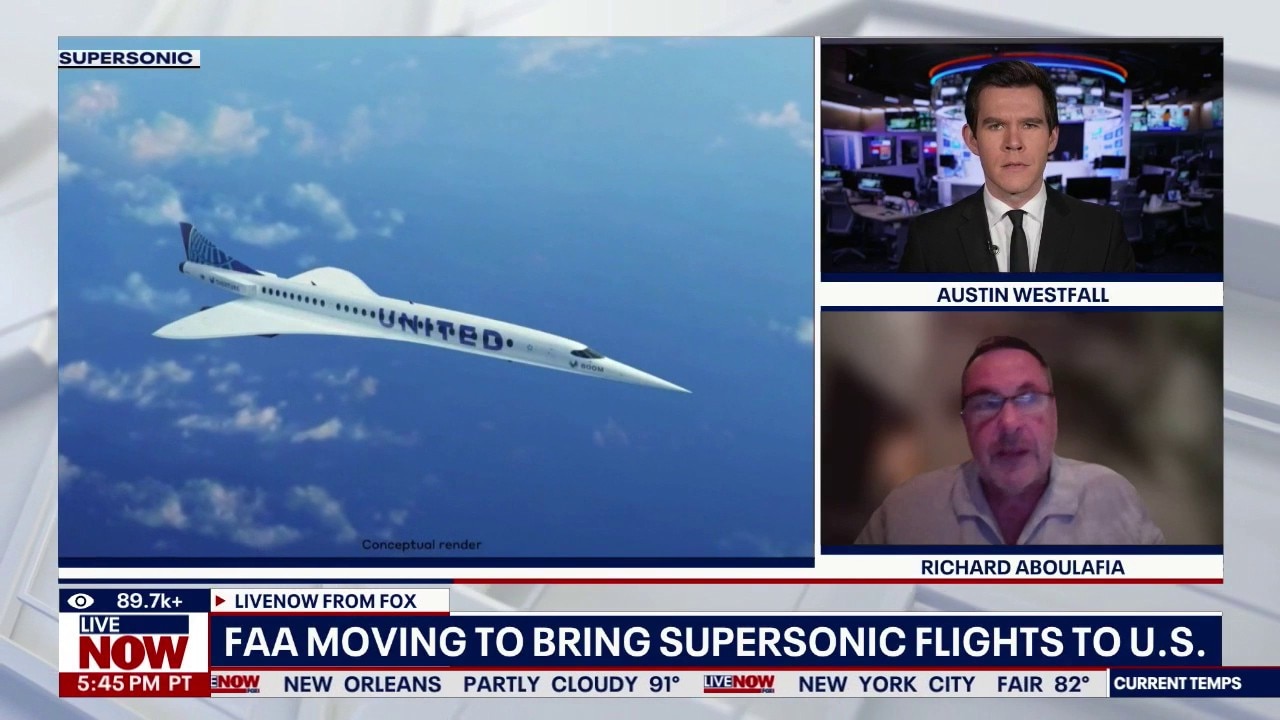
FAA moving to bring supersonic flights to U.S.
Richard Aboulafia, managing director of Aerodynamic Advisory, joins LiveNOW's Austin Westfall to discuss the FAA's plans to bring supersonic flights to the U.S.
By 1995, the Government Accountability Office said the cost had increased to at least $36 billion as the FAA worked to consolidate facilities and standardize computer hardware and software.
Another FAA modernization effort, known as "NextGen," began in 2004 with an estimated cost of $15 billion. However, a report released last year said the program had faced numerous delays and cost overruns and was less ambitious than originally envisioned more than 20 years ago.
"FAA has delivered a delayed, over budget, and less transformational NextGen than originally planned," the Transportation Department Office of Inspector General said.
The FAA has also spent years trying to eliminate the long-ridiculed practice of air traffic controllers using paper flight strips to track aircraft. The transition began in 2022, but implementing it at 49 major airports is expected to take until at least 2028. The FAA said 18 major airports have already eliminated the paper strips.
The Source: Reuters contributed to this report. The story is based on reporting from Reuters, including comments from Transportation Secretary Sean Duffy and FAA Administrator Bryan Bedford, as well as information from the Federal Aviation Administration, the Government Accountability Office and the Transportation Department Office of Inspector General. This story was reported from Los Angeles.