

Wild pigs with blue meat found in California

Blue meat found in wild pigs in California
California wildlife officials have issued a warning after wild pigs were found with blue-dyed tissue, indicating they had ingested rat poison.
LOS ANGELES - Wild pigs found with blue meat have prompted a warning from California wildlife officials.
What we know:
In a statement, the state Department of Fish and Wildlife said a wildlife trapper reported discovering the dyed tissue in wild pigs caught in Monterey County back in March.
According to lab tests, the pigs had ingested anticoagulant rodenticide diphacinone, a rat poison, officials said.
The pesticide was discovered in their stomachs and livers.
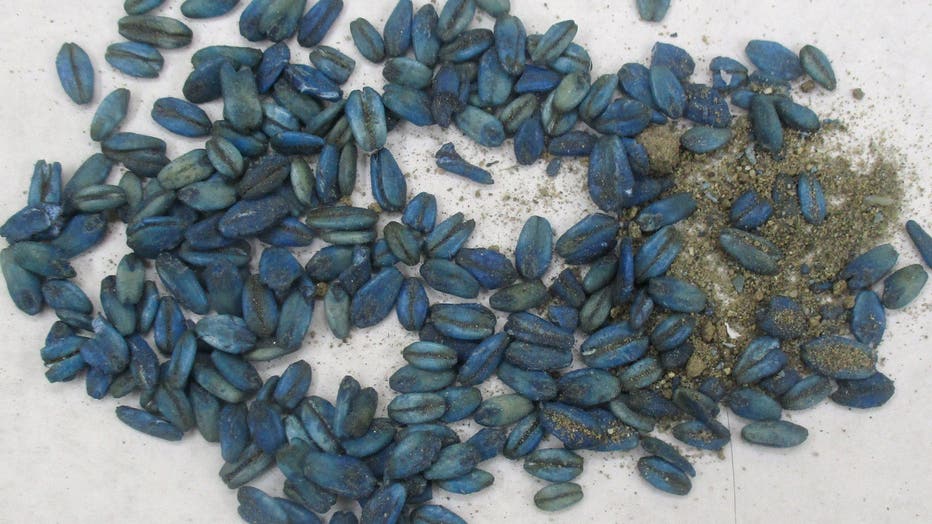
Photo courtesy California Department of Fish and Wildlife
Officials said the pigs can be inadvertently exposed to rodenticides either by eating rodenticide bait or by eating other animals that have ingested rodenticides.
According to officials, rat poison often contains dye to identify it as poisonous, but the dye does not always show up in the animal's tissue.
What they're saying:
"Hunters should be aware that the meat of game animals, such as wild pig, deer, bear and geese, might be contaminated if that game animal has been exposed to rodenticides," said Dr. Ryan Bourbour, the agency’s pesticide investigations coordinator.
Dig deeper:
A 2018 study found rat poison in 10 out of 120 wild pigs and 10 out of 12 bears found in agricultural or residential areas, where the poisons are more commonly used.
What you can do:
Hunters are encouraged to report any unusual findings in wildlife meat or fat by calling 916-358-2790 or emailing WHLab@wildlife.ca.gov.
The Source: The information in this article is based on an official statement and lab test results from the California Department of Fish and Wildlife. The details regarding the discovery of blue meat in wild pigs, the presence of rat poison, and the health warnings for hunters are all explicitly sourced from the agency and its pesticide investigations coordinator, Dr. Ryan Bourbour.