

US military draft disqualifications list: See if you're exempt
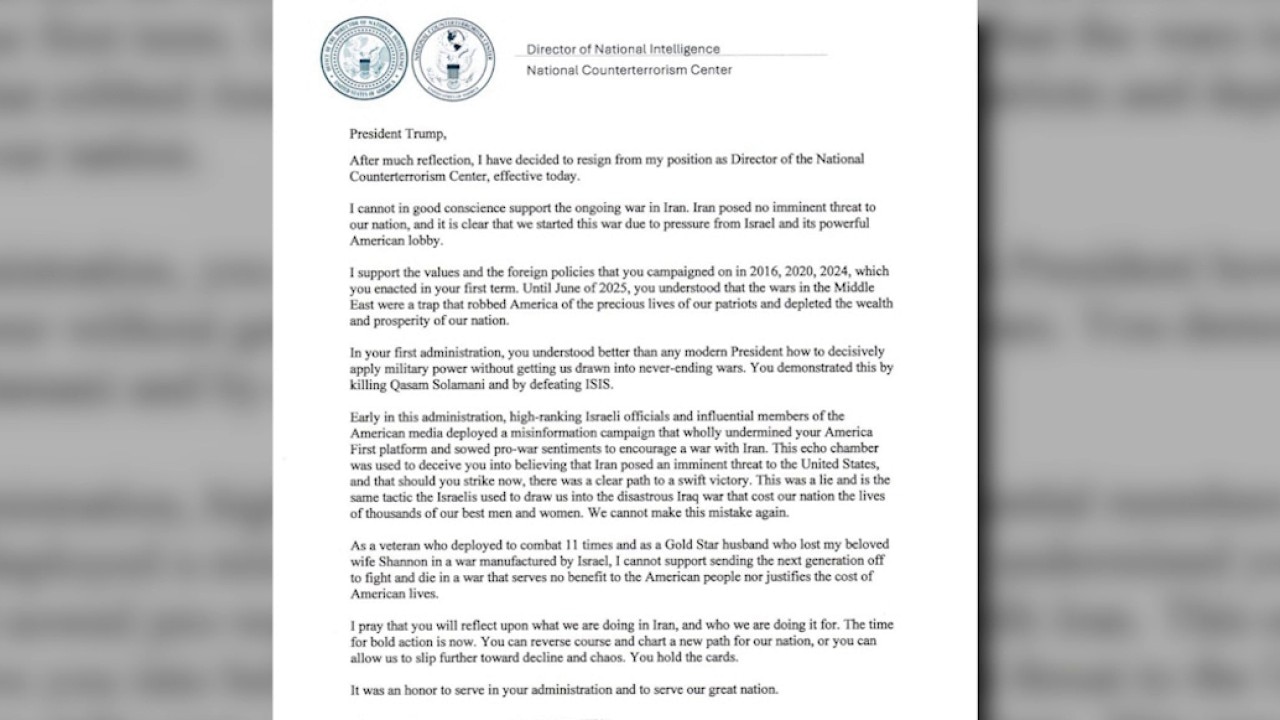
SUGGESTED VIDEO: Joe Kent resigns as top counterterrorism official over Iran war
Kent said he could not "in good conscience" back the war, and said he believed Iran posed no threat to the U.S.
LOS ANGELES - As the conflict with Iran enters a critical phase and regional stability remains volatile, questions regarding a potential U.S. military draft have reached an all-time high.
With the National Defense Authorization Act (NDAA) set to be implemented by December 2026, the landscape of military service has shifted significantly since the discussions first began.
Here is the breakdown of where the draft stands, who is eligible, and what has changed as the U.S. navigates what may be its largest military engagement in decades.
What we know:
Automatic Registration Mandate
The Automatic Selective Service Registration system will be implemented by December 2026. This means the U.S. government will no longer rely on manual sign-ups but instead, the Selective Service System will automatically register all eligible citizens using federal records (such as DMV and Social Security data).
SUGGESTED: US military draft 2026? Here's what we know so far
Failure to register classifies as a felony, which may result in imprisonment for up to five years and/or a fine of $250,000 max.
Do Immigrants Need to Register?
If you are an 18-25-year-old immigrant man living in the U.S., you are required to register with few exceptions. If you are an immigrant seeking citizenship who failed to register prior turning age 26, tap or click here.
The few individuals who are exempt from this requirement are those on current non-immigrant visas, as long as they remain on a valid visa up until they turn 26.
U.S. dual nationals are required by law to register with the Selective Service System within 30 days of their 18th birthday, regardless of whether they live inside or outside the U.S.
Are Women Now Required to Register?
Despite previous discussions on expanding the Selective Service System, there is no provision requiring women to register for the military draft.
SUGGESTED: US military: Is there a draft in 2026?
In the event that the law is changed to include registering women, "Selective Service is prepared to expand registration," the website reads.
Military Draft Disqualifications: Who is Exempt?
Despite the heightened state of readiness, not everyone is eligible to be called into active duty. The Selective Service maintains a strict list of exemptions and deferments.
PREVIOUS COVERAGE: US military draft disqualifications list - are you exempt?
The following individuals remain exempt from the draft:
- Non-immigrant men/women: Those on valid student, visitor, tourist, or diplomatic visas.
- Active Duty Personnel: Those already serving in the U.S. Armed Forces.
- Service Academy Cadets: Students at West Point, Annapolis, and other elite military colleges.
- Incarcerated or Institutionalized Individuals: Those currently in hospitals, mental health institutions, or prisons (though they must register within 30 days of release).
SUGGESTED: FBI warns California of possible Iranian drone attack
Deferments and Specialized Claims
- Ministers and Divinity Students: While they must register, they can claim a "Ministerial Deferment" if the draft is activated.
- Hardship Deferments: Individuals who are the sole support for dependents (such as elderly parents or children) can apply for a postponement.
- Conscientious Objectors: Those who can prove their opposition to war is based on deep moral, ethical, or religious beliefs may be assigned to non-combatant service or civilian alternative service.
Why you should care:
The "Iran Factor": Why Now?
The last time the U.S. held a draft was in 1973 during the Vietnam War.
However, the scale of the current Iran conflict has strained the All-Volunteer Force.
SUGGESTED: Live updates: Trump claims allies, NATO refuse to help secure Strait of Hormuz amid Iran war
Pentagon officials have noted that while a draft remains a "measure of last resort," the infrastructure for a lottery-based call-to-service is fully operational for the first time in over 50 years.
If the President and Congress were to authorize a draft today, it would begin with a lottery based on birthdays, followed by physical and mental evaluations at Military Entrance Processing Stations (MEPS).
Penalties for Non-Compliance
Even with automatic registration, attempts to "dodge" or interfere with the Selective Service process carry heavy penalties in 2026, such as:
Felony Charges: Up to five years in prison.
Fines: Up to $250,000.
Loss of Benefits: Ineligibility for federal student loans (FAFSA), federal job training, and government employment.
The Source: This report is based on the legislative mandates outlined in the 2026 National Defense Authorization Act (NDAA) and updated status reports from the Pentagon. Additional information about exemptions is derived directly from the Selective Service System’s current operational guidelines as of March 17, 2026.