

Skid Row drug bust: LAPD and feds target gang-run operation in sweeping raid
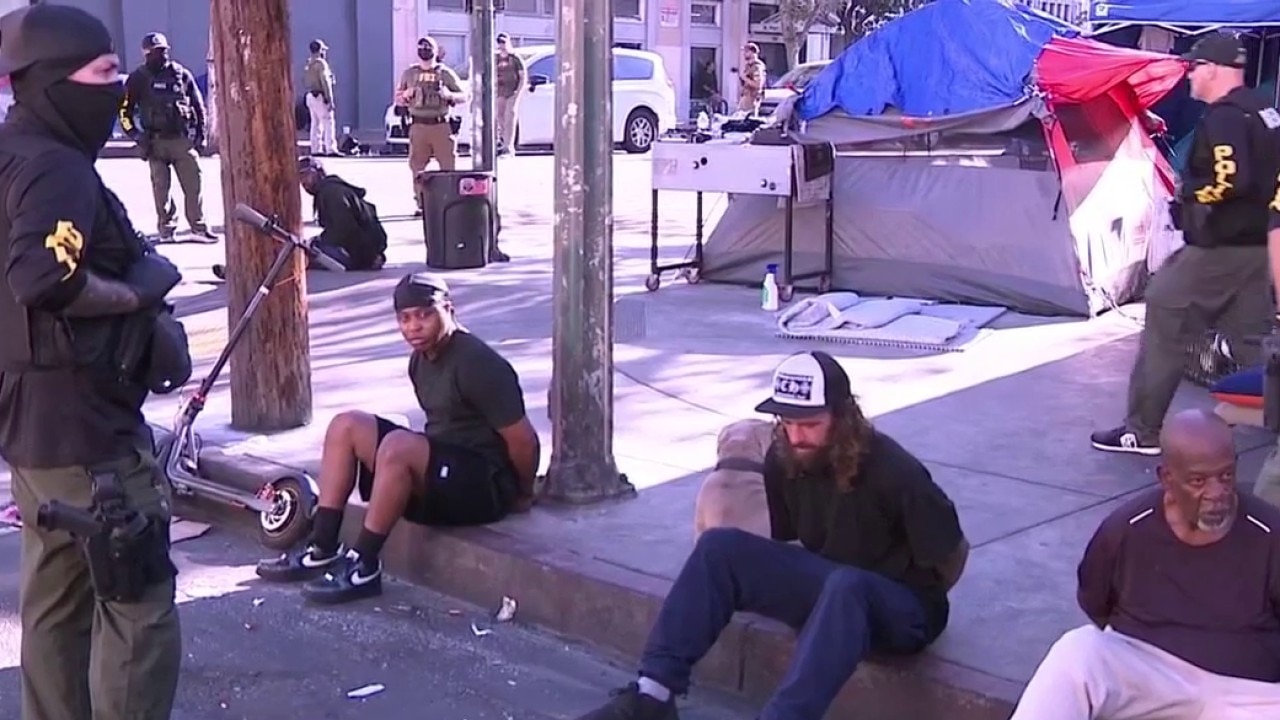
Feds takedown Skid Row drug ring
Federal and local law enforcement agencies arrested nearly two dozen suspects in a massive multi-agency drug bust targeting gang-run dealing operations on Skid Row.
LOS ANGELES - A massive crackdown, dubbed 'Operation Save Skid Row,' targeted over two dozen alleged drug dealers and distributors.
Officers say these criminals are allegedly preying on the homeless and those struggling with addiction.
What we know:
The FBI, DEA, ATF, and LAPD were among the many agencies that joined forces to go after suspected drug dealers on Skid Row.
Swarms of law enforcement officers descended upon Skid Row Thursday. Officials made nearly two dozen arrests, confiscated drugs, firearms and wads of cash in a matter of minutes.
What they're saying:
"We are beginning the dismantling of the drug trafficking organizations that have been controlling Skid Row," First Assistant U.S. Attorney, Bill Essayli said.
"Make no mistake, the drug dealers currently own Skid Row as we stand here today, are mostly gang affiliated and distribute all kinds of drugs to the homeless," Essayli later said. "They are selling them methamphetamine, fentanyl PCP, you name it."
In total, officials say officers searched nearly 30 locations within the greater LA area, but primarily near 5th and Crocker Street.
"Just to be clear, we are not targeting the homeless people, we are targeting the drug dealers who take advantage of them," said Oleg Pobereyko, Acting Assistant Special Agent in Charge at IRS Criminal Investigation.
Federal officials say the alleged drug dealers are using homeless tents to sell or deal drugs and even disguising themselves as homeless or city workers.
Multi-agency operation
"Today's operation is the culmination of over six months of shared investigative work, intelligence gathering and planning," said LAPD Chief Jim McDonnell.
The operation is a joint effort between federal agencies and the LAPD, whose relentless investigative work, according to DEA officials, helped lead to the identification of 28 suspects.
When it comes to ridding Skid Row of drug dealers, authorities say this is just the beginning.
"As you saw with MacArthur Park it was not a one and done, we will do multiple operations well do as many as we need, it's going to be a zero tolerance zone," said Essayli.
As of Thursday afternoon, federal officials say five of the 28 suspects are still fugitives. Twenty-three have been arrested.
Alleged tactics, disguises, and key suspect
Of the 23 suspects arrested, they were charged in federal criminal complaints with distributing drugs, including fentanyl and methamphetamine.
According to federal court documents, drug dealers allegedly used tents and makeshift structures to conceal narcotics sales, sometimes dressing as unhoused residents or social workers to avoid detection.
Authorities said dealers also stored drugs in vehicles, single-room occupancy housing units and nearby residences, often using properties and vehicles registered to other people.
Among them was Rodney Thomas, 55, also known as "Jamaica," who prosecutors allege lived in a downtown Los Angeles high-rise near the Los Angeles Convention Center but traveled to a tent at Fifth and Crocker to sell drugs.
According to court documents, Thomas drove to the location in luxury vehicles, including a Bentley and a Mercedes-Benz.
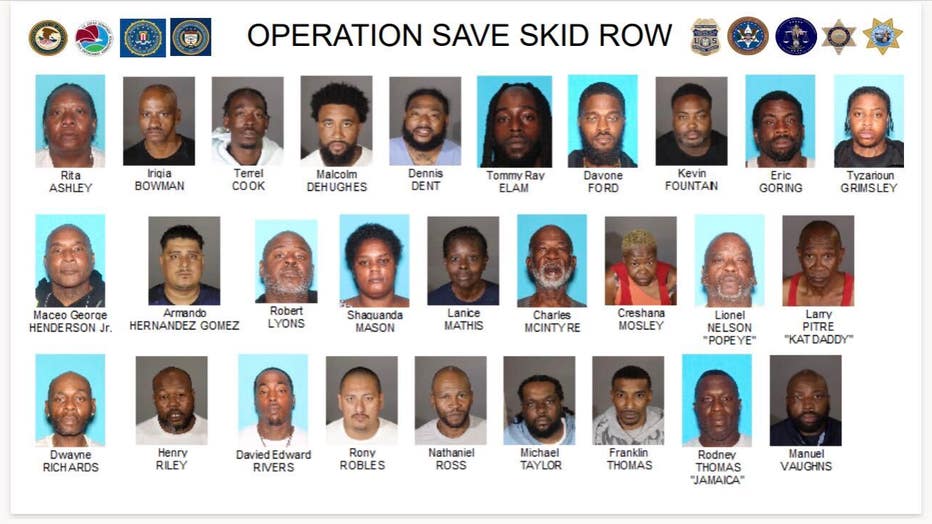
Other defendants accused of dealing drugs in the area include Charles McIntyre, 65; Dwayne Richards, 62; Tyzarioun Grimsley, 28; Eric Goring, 38; and Michael Taylor, 39, all of Los Angeles.
Also arrested were Manuel Vaughns, 52, of West Covina; Larry Pitre, 70, also known as "Kat Daddy," of Studio City; and Lionel Nelson, 57, also known as "Popeye," of Watts.
Federal prosecutors allege Vaughns, an identified Raymond Avenue Crip gang member, regularly sold drugs in Gladys Park in Skid Row.
Taylor allegedly disguised himself as an unhoused person by wearing dirty clothing and enlisted people living on the streets as lookouts, paying them with drugs, according to court documents.
Prosecutors also allege members of the Pueblo Bishops Bloods gang distributed drugs from makeshift tents and tables near Fifth and San Pedro streets.
Beyond Skid Row
Dig deeper:
The operation extended beyond downtown Los Angeles to locations in other parts of Los Angeles County, Simi Valley in Ventura County and San Bernardino County.
At the earlier news conference, McDonnell said members of the Main Street Crips and other gangs were involved in drug distribution operations that had continued for years.
He described some of the alleged criminal enterprises as "generational," with parents raising their children to eventually participate in drug dealing.
The Source: Information for this story came from interviews with First Assistant U.S. Attorney, Bill Essayli and Acting Assistant Special Agent in Charge at IRS Criminal Investigation, Oleg Pobereyko. Information on the indivudial suspects arrested came from court documents cited by City News Service.