

Report released on San Onofre nuclear waste removal efforts amid rising sea levels
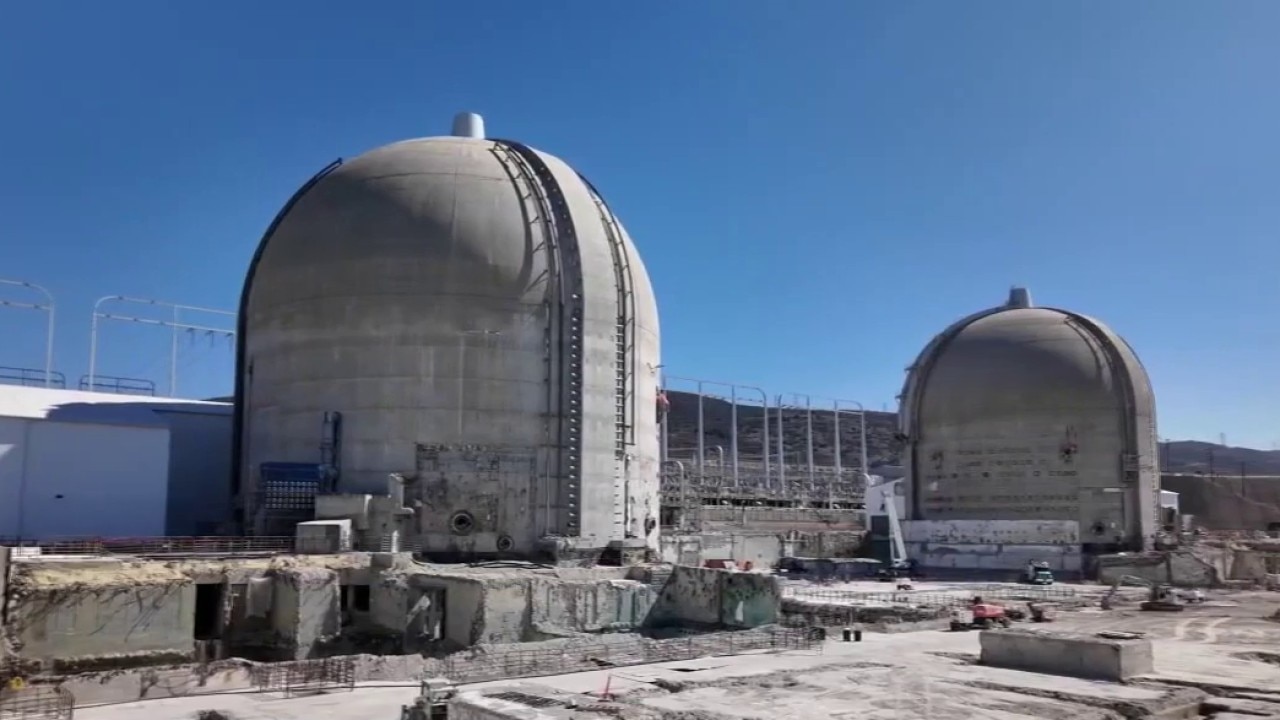
Officials push to remove nuclear waste from San Onofre as sea levels rise
As rising sea levels and coastal erosion threaten the Southern California shoreline, local and federal leaders are pushing for a permanent plan to move spent nuclear fuel off the coast at the shuttered San Onofre Nuclear Generating Station.
LOS ANGELES - More than a decade after the San Onofre Nuclear Generating Station shut down, federal leaders are ramping up efforts to try to find a permanent home for the facility's spent nuclear fuel.
A new report from U.S. Rep. Mike Levin’s office about the shuttered plant highlights federal funding, demolition progress and potential pathways to finding a site for permanent relocation.
Officials emphasize that removing nuclear waste from the Southern California coastline is a priority amid rising sea levels and coastal erosion.
What we know:
For decades, the iconic containment domes just south of San Clemente served as familiar coastal landmarks. However, those structures could be completely demolished by the end of 2027 as the plant's decommissioning nears the finish line, officials said Wednesday.
"In the coming months, crews are going to begin taking down the containment domes behind us," said U.S. Rep. Mike Levin (CA-49).
"There's no immediate danger to the community, but this site was never designed to hold spent nuclear fuel indefinitely," Rep. Levin later said during a press conference Wednesday at the site.
Overcoming logistics and climate threats
Another motivating factor in the push to clear the site is the ongoing threat posed by Mother Nature. Recent winter storms, high tides, and aggressive coastal erosion are increasingly eating away at the Southern California coastline.
Steve Powell, President and CEO of Southern California Edison, noted that the plant was built with environmental hazards in mind.
"We understood the hazards that would exist, whether those are earthquakes, sea-level rising, tsunamis, and all those things," Powell said. He assured the public that the canisters of the spent nuclear fuel are engineered to withstand extreme conditions into the future. Even so, officials agree that permanent removal is the ultimate goal.
Federal officials point to encouraging recent developments
In July, the US Department of Energy announced five states as potential hosts for Nuclear Lifecycle Innovation Campuses. The DOE says the proposed campuses are "designed to support activities across the full nuclear fuel lifecycle, including fuel fabrication, enrichment, reprocessing used nuclear fuel, and final disposition of used nuclear fuel."
On Wednesday, Rep. Levin highlighted a possibility for safely transporting the spent nuclear fuel when the time comes.
"We now have something called the Atlas railcar system, that's the first of its kind built to safely move spent fuel through existing commercial rail lines."
Federal leaders estimate that major decommissioning work across the San Onofre site is expected to be completed by the end of 2028.
The Source: Information for this story came from a press conference held by Rep. Mike Levin. Statements also came from Steve Powell, President and CEO of Southern California Edison, and the US Department of Energy.