

North Hollywood tiny home community offers path off streets, but challenges remain
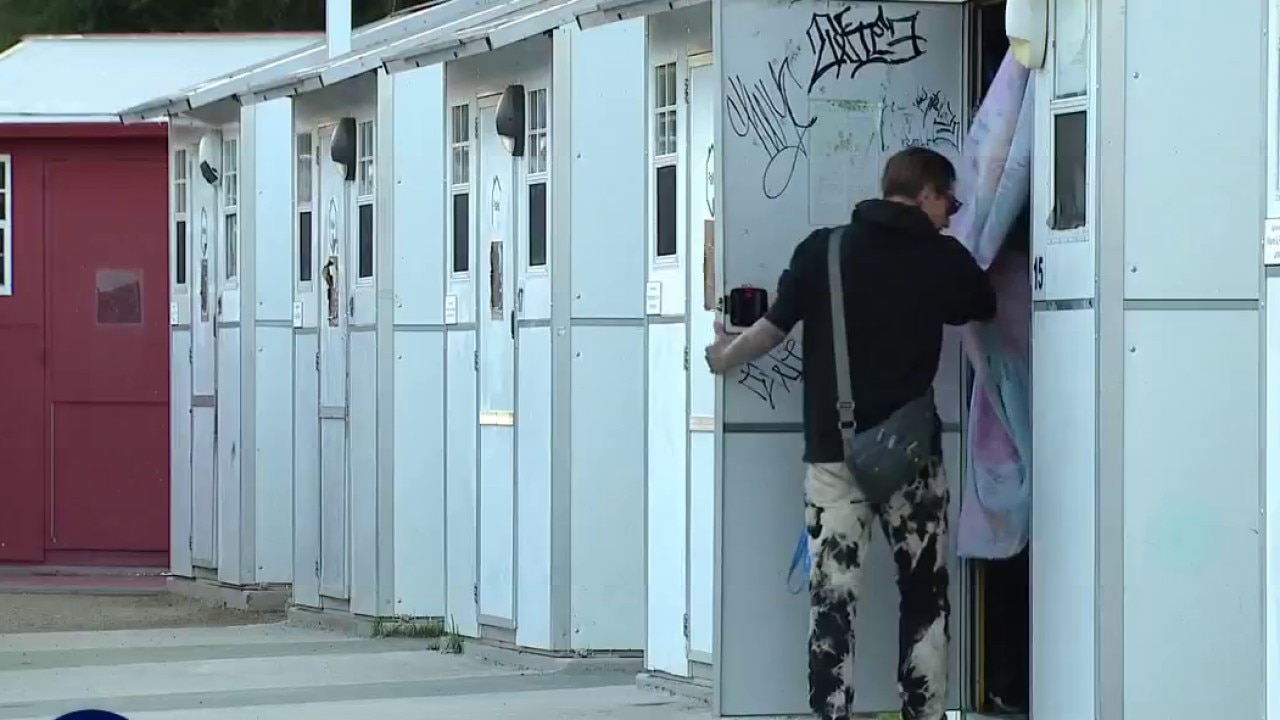
North Hollywood tiny home offering path off streets
A North Hollywood tiny home community is providing transitional housing for dozens of formerly unhoused people as part of Los Angeles’ strategy to address homelessness.
LOS ANGELES - A North Hollywood tiny home community is housing dozens of people who were recently living on the streets, offering a glimpse into one of Los Angeles’ strategies to address its homelessness crisis.
The site includes 78 beds across 39 small units and is designed as transitional housing to move people off the streets and into more stable living situations. Residents are allowed to bring pets — a key factor that outreach workers say often prevents people from accepting shelter.
"It’s helping me — not being on the streets," said Jesus Hernandez, who lives at the site. "Otherwise, I’d still be out there like everybody else."
Drug use is prohibited on the property, and residents must check in at least once every three days. However, there is no limit on how long someone can stay.
The average stay is about 200 days, according to Ivet Samvelyan, vice president of Hope the Mission, the organization that operates the site.
"We exit about 30% of our clients into permanent housing," Samvelyan said.
That figure is higher than broader data from the Los Angeles Homeless Services Authority, which reported a roughly 10% success rate in 2024 for similar city-funded programs under the Inside Safe and City Roadmap initiatives.
Still, officials acknowledge the challenges.
"It’s only going to be around 30% because we’re trying to figure out what works and what doesn’t," said Los Angeles City Councilmember Adrin Nazarian, who represents the district.
When asked whether that means the model is failing, Nazarian pushed back.
"What’s the alternative? Have them on the street?" he said.
For residents like Dennis, he said the program offers a critical safety net after falling on hard times.
"I was a software engineer for 25 years and couldn’t find work. That’s how I ended up on the streets," he said. "I’m grateful a place like this exists."
But progress is not guaranteed.
Hernandez, who has been at the site for several months, said his path forward remains uncertain.
"It all depends," he said when asked if he feels close to securing permanent housing.
Outreach workers say one of the biggest hurdles remains convincing people living on the streets to accept help in the first place. Many decline shelter options altogether.
For those who do accept it, sites like this represent a first step — but not a final solution.
"In my specific case, I couldn’t be more thankful," another resident said.