

Ruptured underground pipeline dumps about 2,400 gallons of crude oil into LA River
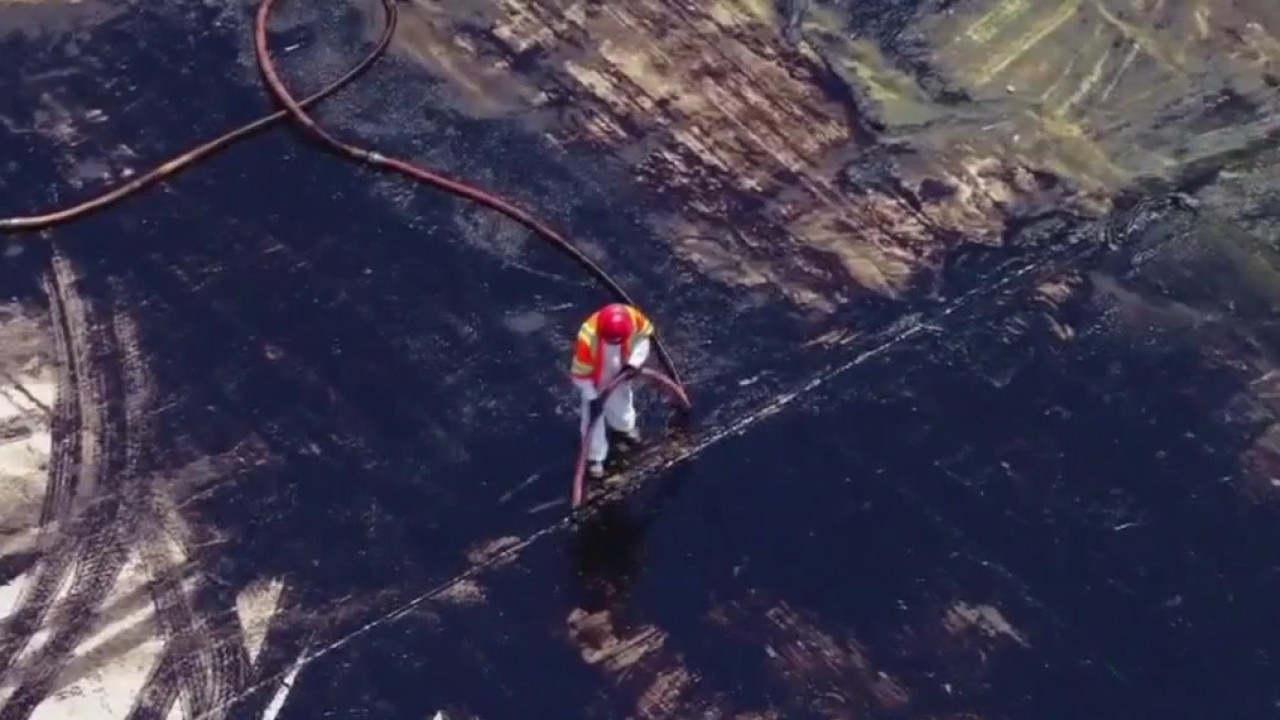
Ruptured pipeline spills 2,400 gallons of oil in East LA
The 16-inch line extends from Kern County to the Port of Long Beach.
LOS ANGELES COUNTY, Calif. - A crude oil pipeline rupture sparked by a morning construction accident triggered a massive, multi-agency containment operation after thousands of gallons of oil filled East Los Angeles streets and flowed directly into the Los Angeles River.
What we know:
Firefighters were dispatched just after 3 a.m. Friday to the intersection of East Cesar Chavez and North Eastern avenues, according to the Los Angeles County Fire Department.
That's where a construction crew laying out a fiber optic line had ruptured an underground 16-inch pipeline that extends from Kern County to the Port of Long Beach.
A large-scale response was launched involving LA County Fire, the Air Quality Management District (AQMD), California Department of Fish and Wildlife, and hazardous materials teams from both local health and state agencies.
The crude oil entered local storm drains and traveled downstream into the Los Angeles River, officials said. Contracted cleanup crews established multiple containment sites downstream.
SkyFOX aerial footage tracked the trail of the crude oil and confirmed that a visible oil sheen had been stopped near the Highway 91 freeway, preventing the spill from continuing toward the ocean.
The pipeline operator was notified of the rupture and shut down the flow within 30 minutes by utilizing a shut-off valve located near Dodger Stadium, officials said.
The leak has since been controlled and is no longer releasing oil into the streets, though at least 2,400 gallons of crude oil had already spilled.
No injuries were reported.
What we don't know:
It remains unclear exactly how long the physical cleanup of the intersection and the affected waterways might take.
Investigators are also still determining the exact total volume of the spill.
While the road surface is being marked up for excavation, officials have not stated when the highly trafficked intersection will reopen to commuters.
What they're saying:
"Petroleum product entered storm drains and was released into the Los Angeles River. Investigation into the cause and volume is ongoing," said California Department of Fish and Wildlife spokesman Eric Laughlin. "OSPR (Office of Spill Prevention and Response) personnel on scene include wildlife officers, environmental scientists and oil spill prevention specialists."
Laughlin added, "We've got multiple sites in the L.A. River downstream from here where we have contracted crews that are working to contain the oil. It's obviously more concentrated on where it first entered the river, but the crews are set up multiple sites on Highway 91. They're out there trying to contain it, and so we're doing everything we can to minimize the impact on the environment."
"The Oiled Wildlife Care Network (OWCN) has been notified and is on standby for wildlife response," Laughlin said. "No observations of oiled wildlife have been reported at this time."
What's next:
Officials said it will "take days" to repair the fractured 16-inch pipeline. Workers are currently marking up the street at Eastern Avenue and Cesar Chavez Boulevard to begin excavating down to the leaking pipeline.
Environmental scientists, wildlife officers, and oil spill prevention specialists will remain stationed along the LA River to monitor the containment barriers and investigate the total spill volume.
Public Health will continue to collaborate with response teams to monitor local air quality and the progress of the cleanup.
What you can do:
Commuters are advised to completely avoid the intersection of East Cesar Chavez and North Eastern avenues, as the CHP stated the SigAlert is "active until further notice."
Local residents who spot wildlife impacted by the oil should report it to authorities rather than attempting to intervene themselves.
The Los Angeles County Department of Public Health has issued the following guidance for residents in the affected area:
- Manage Odor Exposure: If you smell odors outdoors, close windows and doors, turn off HVAC systems and air conditioners that pull in outside air, and stay indoors until the odor has passed. Once the odor outside is gone, open windows and doors to air out your home, and use fans or HVAC systems to ventilate.
- Check on Vulnerable Neighbors: Monitor those who may be more sensitive to odors or air pollution, including older adults, children, pregnant persons, people with asthma or breathing conditions, and those with weakened immune systems.
- Avoid Contact: Stay away from spilled oil and contaminated debris. Do not touch or walk through affected areas, and keep children and pets away. If oil gets on your skin or clothing, wash with soap and water right away and change into clean clothes.
- Report and Seek Help: Report odor complaints to the South Coast Air Quality Management District (AQMD) at 1-800-288-7664. If health symptoms are severe or do not go away, contact your medical provider. If you do not have a provider, call the Public Health – Community Health Complaint Line at (626) 430-9821.
The Source: This report is based on information provided by the Los Angeles County Fire Department, the California Highway Patrol, and the California Department of Fish and Wildlife. City News Service contributed.