

Trump scales back South Korea military drills, cites 'very good relationship' with Kim Jong Un
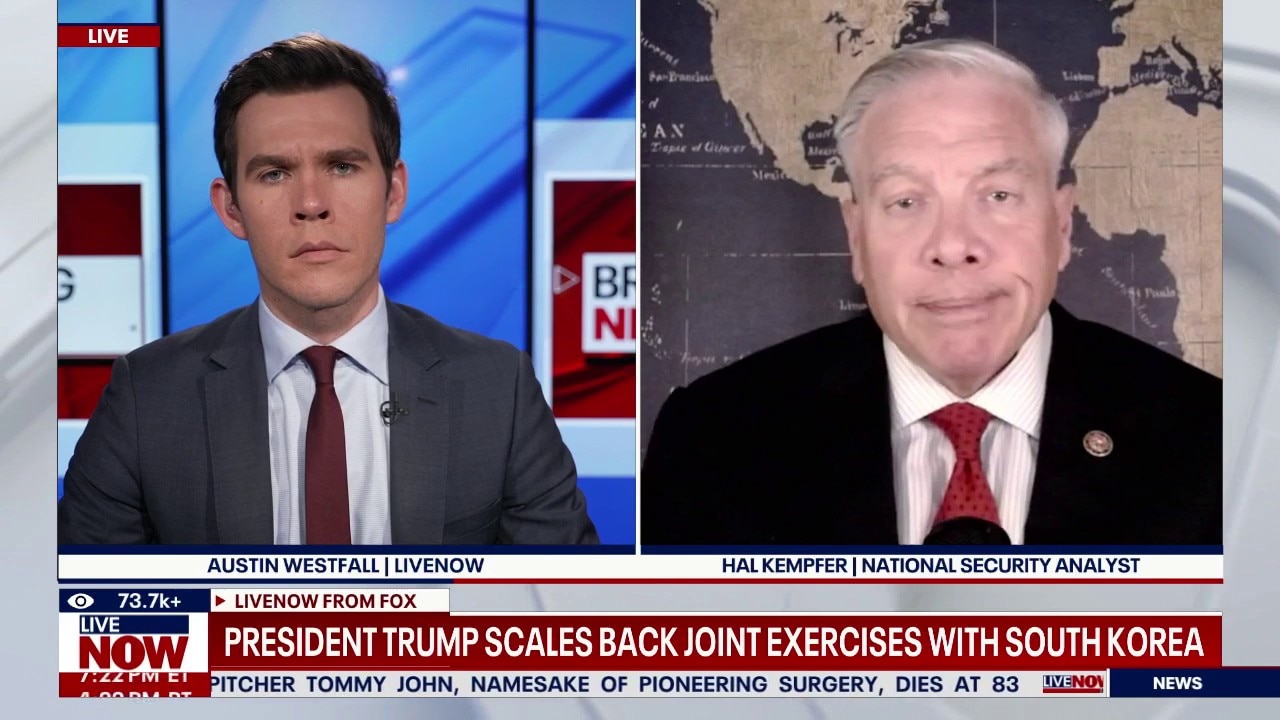
Trump orders scale-back of joint South Korea exercises
LiveNOW’s Austin Westfall is speaking with national security analyst Hal Kempfer as President Donald Trump reportedly has called for the United States to scale back planned joint military exercises with South Korea. Trump said Sunday that his decision surrounds denuclearizing Iran and his positive relationship with North Korea’s Kim Jong Un.
President Donald Trump highlighted his "very good relationship" with North Korean leader Kim Jong Un on Sunday when he revealed the U.S. would dramatically scale back its participation in planned military exercises with South Korea.
What they're saying:
"These exercises are not only costly, with much of these costs paid for by the United States of America (as usual!), but send a signal that is totally inappropriate and hostile, to a Country that, as long as Donald J. Trump has been President, has been unthreatening and respectful," Trump wrote in a post that began by describing his relationship with Kim.
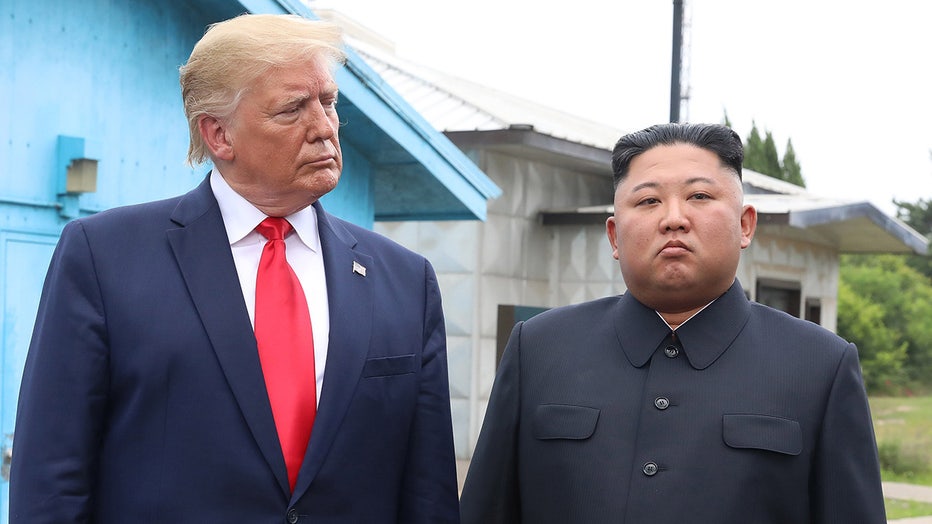
A handout photo provided by Dong-A Ilbo of North Korean leader Kim Jong Un and U.S. President Donald Trump inside the demilitarized zone (DMZ) separating the South and North Korea on June 30, 2019 in Panmunjom, South Korea. (Handout photo by Dong-A I
Toward the end of his post, the president added what he called a "somewhat unrelated (?)" reason for his drawdown, recounting that Seoul declined to participate in the effort to denuclearize Iran.
RELATED: It's the last season for legal dog meat in South Korea
The backstory:
The U.S., which has more than 28,000 service members stationed around the peninsula, was supposed to participate in the 11-day exercise, which included multiple complex scenarios, along with 18,000 South Korean soldiers with the goal of improving their readiness against North Korean threats. Pyongyang called the drills "a rehearsal for an aggressive war" and issued other unspecified threats. North Korea also recently resumed ballistic missile tests that are banned by the U.N.
Dig deeper:
With the USS George Washington departing from the Pacific Ocean and expected to replace the USS Abraham Lincoln in the Middle East, the U.S. now lacks an aircraft carrier in that part of the world. A new ship could be dispatched by the Navy to the region, but some analysts called it a sign of the U.S. pulling back from the Asia-Pacific region. The U.S., however, has argued that the Pacific is too valuable economically to lose.
The Source: Information for this article was taken from The Associated Press and Truth Social. This story was reported from Orlando.