

Ninth Circuit dismisses Trump administration's appeal over 20,000 California mail ballots
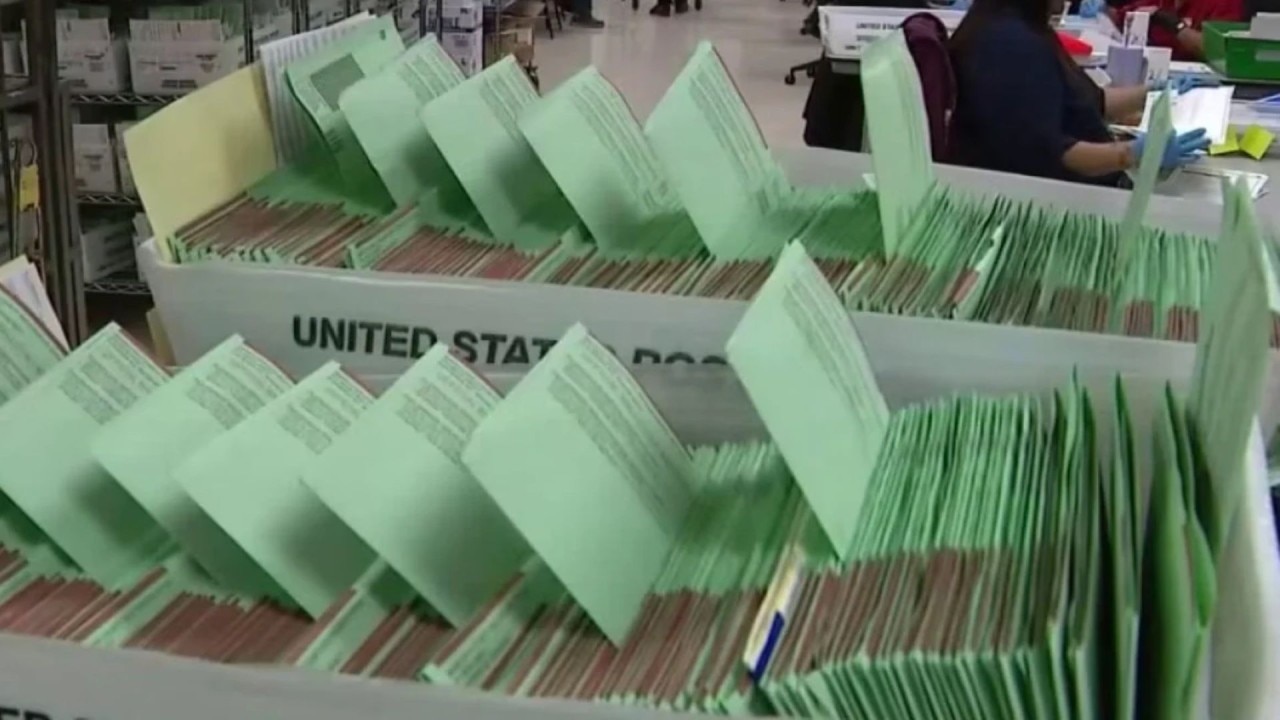
Ninth Circuit dismisses emergency appeal
The 9th U.S. Circuit Court of Appeals dismissed the Trump administration's emergency appeal to set aside 20,000 California mail-in ballots. In the Trump administration's appeal, it claimed the 20,000 vote-by-mail ballots may have "likely" come from alleged noncitizens.
The 9th U.S. Circuit Court of Appeals dismissed the Trump administration's emergency appeal to set aside 20,000 California mail-in ballots. In the Trump administration's appeal, it claimed the 20,000 vote-by-mail ballots may have "likely" come from alleged noncitizens.
What we know:
In a 2-1 vote on Monday, the Ninth Circuit ruled that it lacked jurisdiction over the Trump administration's appeal.
"The United States failed to allow the district court adequate opportunity to consider its application for a Temporary Restraining Order ("TRO"). For that reason, we lack jurisdiction over this appeal," the court document outlining the ruling read.
The backstory:
The federal government sued the state of California on Oct. 15, arguing that state officials were taking in ballots from people allegedly identified as likely noncitizens. The U.S. government had asked California to verify the citizenship of those voters and set aside their ballots until their status could be confirmed.
The federal government later asked the district court to rule on Oct. 22, after learning that Los Angeles County had processed more than 331,000 mail ballots. When the district court did not meet that deadline, the government appealed, calling the delay a "constructive denial" of the motion.
What they're saying:
The Ninth Circuit majority said in the court document that the federal government had given the district court a "mere 15 hours," including overnight hours and three business hours, to rule.
The Ninth Circuit majority also said the government had known about its concerns with California’s voter rolls for months, filed its lawsuit after mail-ballot processing had begun and twice asked the district court for a ruling by Nov. 3.
The document’s concurring judges were Judge Mark J. Bennett and Judge Gabriel P. Sanchez. Judge Patrick J. Bumatay dissented, according to the court document.
California Attorney General Rob Bonta issued the following statement in response to the Ninth Circuit's ruling:
"The U.S. Constitution gives states and Congress – not the President or the Executive Branch – the power to determine the time, place, and manner of elections. The court’s order serves as an important step in our efforts to protect Californians’ right to vote and our state’s authority to run fair and secure elections.
"All the evidence – counts, recounts, hand counts, audits – shows that voter fraud is exceedingly rare. Consistent with federal law, California has safeguards in place to protect election integrity and those who break the law should be held accountable. We will fight back against the Administration’s unlawful overreach at every turn."
California Governor Gavin Newson issued a statement via Bonta's office chiming in on Monday's ruling:
"Today’s ruling is a positive development and a welcome speed bump to Trump’s disgusting attacks on the Constitution and our country’s democracy. I have been sounding the alarm since last year, when Trump illegally federalized the California National Guard – Trump is illegally trying to seize powers in the Constitution entrusted to others so he can stay in power. This lawsuit is just the latest step.
"Make no mistake: Trump’s assault on democracy won’t slow down. Each and every one of us can do something: participate in democracy, don’t become disillusioned. Vote early, go to a vote center, put your ballot in a dropbox. If everyone who cares about democracy participates, this election won’t be close – and none of Trump’s lies or conspiracy theories will be able to call that result, and the will of people, into doubt. California is fighting back. And we are calling on all Californians to do the same."
Below is a copy of the court's ruling:
The Source: This report references information on the Ninth U.S. Circuit Court of Appeals’ Oct. 26, 2026, order in United States v. State of California.