

Food recalls soar in the last five years - See what states have been impacted the most
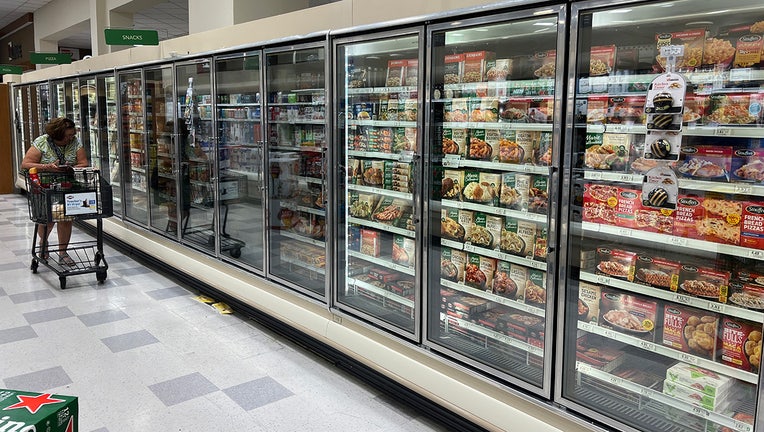
A customer shops in the ready to eat meals aisle of a grocery store on October 17, 2024 in Miami, Florida. (Photo by Joe Raedle/Getty Images)
Food recalls trended higher over the past five years and now sit 20 percent higher than they were at the start of the decade. On top of that, the most serious type of recall – Class I – is the one growing the fastest.
Why you should care:
Manufacturers and retailers recall food when they pose potential health or safety concerns. The specific reasons, however, can vary. The most common reason is contamination from allergens, bacteria, or foreign objects, an analysis from Trace One, a software company that specializes in the food and beverage industry, found. However, companies also watch out for mislabeled goods or spoiled items, among other reasons.
By the numbers:
The total number of recalls grew from 505 in 2021 to 613 last year, Trace One’s numbers showed. The company pointed out that Class I recalls grew by 36.4 percent while the Class II and Class III categories rose by less than half of that, 11.2 percent and 17.1 percent respectively.
The most common recalls
Nearly half of all food recalls (45.2%) are the result of allergen contamination, the report indicated. Things like wheat, dairy, or nuts that are not on the ingredients list can get into the food through cross-contamination. While the specific allergen spurring the recall may not affect all or most consumers, it could pose the threat of severe allergic reactions in people sensitive to the contaminant.
Two other types of contamination rank second and third as the most prevalent reasons for recalls, Trace One reported. Bacterial contamination is to blame in 22.6 percent of cases, and can include dangerous pathogens like salmonella, E. coli, and listeria. They can cause serious illness in anyone, but vulnerable populations like older adults and younger children are particularly at risk.
Ranking third is foreign object contamination, when items like rocks, insects, plastic, or metal get into the food and could possibly injure someone trying to eat or drink the item.
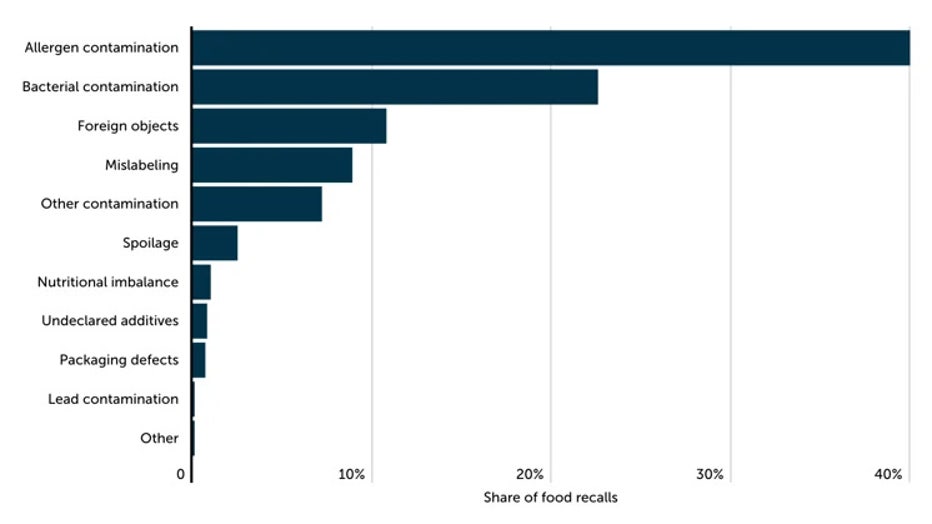
A list of the most common causes of food recalls based on an analysis of 2021–2025 FDA data. (via Trace One)
Number of recalls by state
Not all recalls affect the entire nation, and many of them list the particular states where the products in question are sold. Consequently, the number of recalls that impact people can vary widely based on where they live.
For example, the Trace One report showed five states were listed in at least a third of recalls, with California leading the way at 38.3 percent. At the other end of the spectrum, a person who lived in South Dakota saw around a third as many, with only 13.9 percent of recalls affecting the state. See the map below for a breakdown of those percentages and the number of total recalls by state:
What you can do:
By keeping tabs on food recalls, individuals, especially those with severe allergies, can help protect themselves from risk. Two federal agencies, the U.S. Department of Agriculture and the Food and Drug Administration share the responsibility of tracking and notifying the public about recalls.
They have the power to issue recalls, as do the manufacturers. The USDA’s recall website is available at https://www.fsis.usda.gov/recalls, while the FDA’s page can be found at https://www.fsis.usda.gov/recalls.
Additionally, FOX Television Stations will frequently report on major and important recalls to help those agencies keep everyone informed.
What to do about a recalled product
Big picture view:
If someone is worried about having purchased a recalled product, the first thing to do is ensure that they have the specific one in question. Many times, the recall may not affect every single one of the items. Instead, it may only affect a specific batch. That’s why Trace One recommends checking details like product name or number, geographic distribution, and the expiration date, along with any other details that may be included in the recall.
Recall notices will usually contain instructions about what the consumer should do with the product, such as if they can return it for a refund. If the product is contaminated, it should be sealed and properly disposed of, Trace One noted, adding that the items should not be donated or given to a pet.
People who may have consumed a recalled food or drink should watch for symptoms like nausea, vomiting, or fever. If those symptoms do occur, then it is best to seek medical attention, especially for those who are pregnant or have a weakened immune system.
What is a Class I recall?
Dig deeper:
The USDA Food Safety and Inspection Service (FSIS) and the FDA divide their recalls into three classes. When investigating a recall, a committee that includes FSIS scientists, technical experts, field inspection managers, and others will review the information and decide whether it is a Class I, Class II, or Class III recall. Here is a breakdown of what those classes mean (as per the USDA):
- Class I - A Class I recall involves a health hazard situation where there is a reasonable probability that use of the product will cause serious, adverse health consequences or death.
- Class II - A Class II recall involves a health hazard situation where there is a remote probability of adverse health consequences of using the product.
- Class III - A Class III recall involves a situation where use of the product will not cause adverse health consequences, or the risk is negligible.
The Source: Information in this article was taken from the USDA, FDA and Trace One, which analyzed 2021–2025 FDA and USDA data. Trace One is a software provider, specializing in the food & beverage industry. This story was reported from Orlando.